The fateful legacies of Maastricht
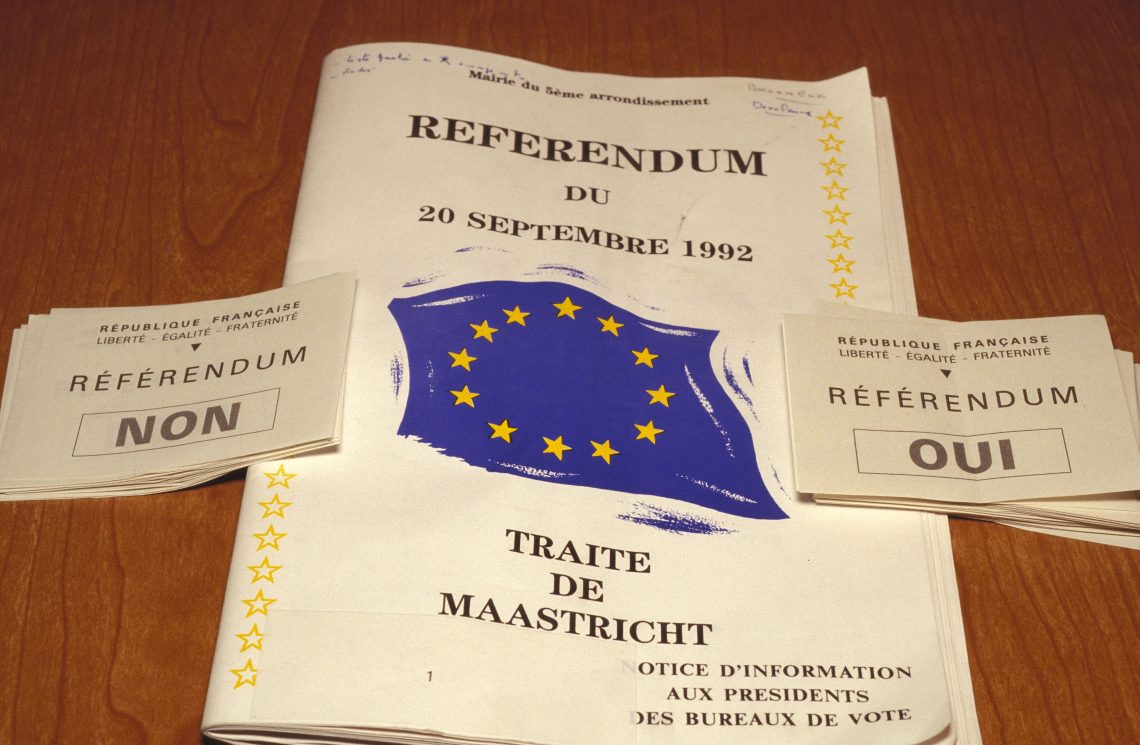
The Maastricht Treaty reshaped Europe, but its centralizing ambitions betrayed economic growth and triggered crises still unfolding today.
- Political hegemony prevails over innovation and economic growth
- Results include cultural divides, fiscal imbalances, migration struggles
- Brussels’ centralization efforts now face pushback from member states
- For comprehensive insights, tune into our AI-powered podcast here
In December 1991, European leaders gathered in the small Dutch town of Maastricht for a meeting that would have significant long-term consequences. It was a watershed moment that capped four decades of remarkable success in building continental institutions of free trade. European prosperity had been growing since the signing on March 25, 1957, of the Treaty of Rome that established the European Economic Community (EEC) and laid the groundwork for the “four freedoms” – the free movement of goods, services, people and capital − which are fundamental principles of the single market. Those in attendance in 1991 faced a choice: whether it was time to expand on those successes, or, to entrench and consolidate.
Given all the troubles and controversies that would plague the “European project” in the aftermath of Maastricht, it may be useful to recall what was at stake then, and why the choices made would have such negative consequences. Understanding the legacies of Maastricht is, arguably, essential to understanding current challenges and navigating toward a prosperous future.
The context of the 1990s saw a relatively affluent western stump of Europe engaged primarily in economic cooperation meeting the sudden liberation of countries that, for decades, had been locked into central economic planning. The collapse of the Soviet system and the Iron Curtain provided an opportunity for market expansion of historic significance. That opening was enhanced by the overriding ambition of the newly democratically elected governments in Europe’s east to embark on deregulation and building trade relations with those in the continent’s west.
The EU would also be imbued with all the trappings of statehood, from a flag, hymn, parliament and government all the way to a common currency and a common foreign and security policy.
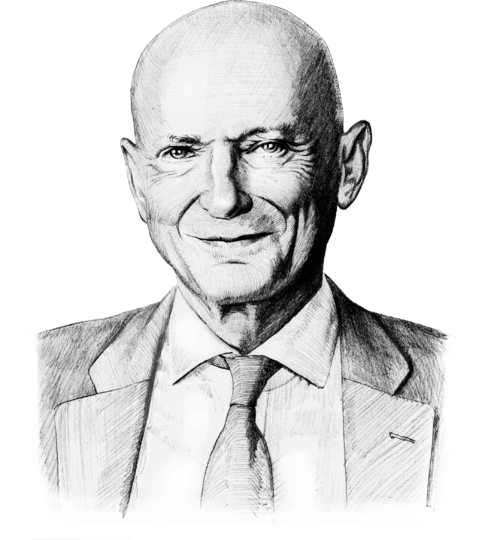
Stefan Hedlund
In stark contrast, the ambition of governments in “old” Europe would, as it turned out, be entrenchment. When the Maastricht Treaty was signed in February 1992, it heralded the formation of a single European Union seemingly uniting 12 countries and consolidating the European Coal and Steel Community, the European Atomic Energy Community and the European Economic Community. This was designed to finally answer former United States Secretary of State Henry Kissinger’s classic quip “Who do I call if I want to speak to Europe?”
Europe would now not only get a dedicated telephone that somebody would answer. The EU would also be imbued with all the trappings of statehood, from a flag, hymn, parliament and government all the way to a common currency and a common foreign and security policy.
From economics to the abolition of borders
When the Maastricht Treaty went into effect, in November 1993, it was already becoming clear what the downside would be. By raising the bar for new entrants to the single market (the ostensible raison d’etre of the bloc), and by creating substantial benefits from membership, the architects of the EU set the stage for major trouble down the road.
Europeans complicated things still more when, in 1995, they enacted the Schengen Agreement that led to the abolition of passport controls and open borders initially between France, Germany, Belgium, the Netherlands and Luxembourg. Today, the Schengen Area encompasses 29 countries and for some is the Achilles’ heel of EU politics, as member states – chastised when taking steps to secure their own borders − grapple with out-of-control immigration and mounting security concerns.
It was not enough that the creation of a common pool of resources for distribution among members created a veritable hothouse for rent-seeking coalitions. Once the club began accepting new members, it would discover two additional problems. One was that presumptive new entrants that failed to live up to the high standards for membership were given powerful incentives to engage in creative accounting. The other was that agencies in charge of enlargement were given their own motivations to show success, creating problems of grade inflation.
The architects of the EU ensured that a potentially very successful free trade area was reduced to a club for the extraction and redistribution of resources.
Although the magnitude of these problems should not be underestimated, the most important failure of Maastricht was that it betrayed the legacy of visionaries like Jean Monnet and Robert Schuman. It was their visions of European cooperation, based on free trade while still respecting national borders, customs and cultures, that had put an end to a millennium of warfare between the Eastern and Western Franks, thus paving the way for Europe to unleash its inherent potential for growth and innovation.
It is important to note that the Wirtschaftswunder (the “German economic miracle” after World War II) of German Chancellor Konrad Adenauer entailed nothing wonderous, only hard work and sound economic policy. The same goes for how the American Marshall Plan provided the funding for European post-war reconstruction. The plan was devised to promote intra-European cooperation, a goal that was achieved with broad margins. When the U.S. funds began arriving, Europe was already on a path of economic growth and innovation.
If those who gathered at Maastricht in December 1991 had chosen to focus on these achievements centered on economic prosperity, rather than on building a United States of Europe designed to outcompete the United States of America, a very different future would have been possible. By instead deciding to raise the bar for new entrants while centralizing decision-making and expanding socialist spending programs, the architects of the EU ensured that a potentially very successful free trade area was reduced to a club for the extraction and redistribution of resources. Over and above the common agricultural policy, regional projects within the EU were so lavishly funded that accepting large candidate countries like Turkey or Ukraine as new members was rendered impossible from the outset.
The EU’s original sin
The EU was created with three fundamental flaws, the consequences of which are now becoming all too obvious.
Who is ‘European’
The first was to place in focus the question of who is “European.” As subsequent experience would show, not all would understand or agree to the elusive notion of “European values,” which essentially boil down to Judeo-Christian values with an increasingly socially liberal bent. Eastern enlargement of the EU was thus bound from the outset to be riddled with problems, especially so in how to approach a large Muslim candidate country like Turkey.
The common currency
The second flaw was the project of creating a common currency, virtually in 1999 and with banknotes and coins circulating by 2002. By failing to make a solid economic case for why countries should switch to the currency, the political creators of the euro had to accept a eurozone that left several key economies on the outside. Notable absentees were the United Kingdom, Denmark and Sweden, together with Central European states Poland, Slovakia, Hungary and the Czech Republic.
For those who did join, such as Greece, it would soon transpire that creating a common monetary policy without a common fiscal policy was a bad idea. The straitjacket of a common interest rate (set largely according to economic conditions in Germany) across a continent that, in contrast to the U.S., had low mobility across borders, was bound to lead to problems.
Even more detrimental was that membership in the eurozone implied an end to currency devaluation. Although this was seen at the outset as a way of introducing healthy fiscal discipline, those in charge failed to consider the reason why devaluation had been such a frequent measure of adjustment.
The Lira lost about a third of its value between 1992 and 1995

Compared to countries in the south of Europe, countries in the north had a more flexible institutional structure that allowed for higher economic productivity. It was the resulting divergence in competitiveness that triggered frequent currency devaluations. German business leaders in particular were only too happy to see that opportunity blocked.
At the outset, countries in Europe’s south also believed that they were the winners. Given that membership in the eurozone was viewed by creditors as a guarantee against default, the stage was set for extravagant borrowing that created a short-lived mirage of affluence. When it transpired that much of the borrowing bonanza had been based on faulty fundamentals, in some cases even on outright cooking of the books, the response was to demand draconian adjustment programs.
It was emblematic that instead of coming clean on how bankers and governments in the north had themselves been instrumental in creating the euro crisis (from 2009 to the mid-to-late 2010s), the bloc’s response was instead to castigate those that had accepted the easy loans. In financial market reporting, Portugal, Italy, Ireland, Greece and Spain came to be derogatorily castigated as the PIIGS. It could be said that the creation of the euro resulted in gains for industry in the north that translated into losses for banks through haircuts that in turn had to be footed by taxpayers.
Immigration
The third flaw is the bloc’s approach to immigration. The most damaging blow was the migration crisis that erupted in August 2015, triggered by the war in Syria with widespread Russian bombing of civilian population centers. Given that the cornerstone of the EU was the creation of the single market, with free movement across internal borders not just of goods and capital but also people, it was essential that mechanisms could be put in place to keep the common external borders safe.
Although substantial bureaucratic efforts were made to address this task, via the Schengen Agreement, the Dublin Regulation and the creation of Frontex, few were willing to recognize that rules can never be stronger than who or what is tasked to uphold them. When Turkey allowed massive streams of refugees to flood into Europe, the EU’s leaders were faced with a challenge they would fail to live up to, short of paying Turkey to keep refugees on its territory.
European border and asylum mechanisms
The Schengen Agreement, Dublin Regulation and the creation of Frontex are key historical developments in the evolution of European border and asylum policies.
Frontex, established in 2004, was initially created to enhance cooperation in border management, focusing on the external borders of the EU. But its mandate and responsibilities have expanded over time and now include risk analysis, surveillance and return operations.
The Schengen Agreement, established in 1985 and implemented in 1995, is an area of free movement aimed at gradually removing border controls between member states. Once a person is within the Schengen Area, they can travel freely in 29 countries without being checked.
The Dublin Regulation of 1990 determined which EU member states were responsible for processing asylum applications. That was followed by Dublin II (2003), which provided more detailed regulations and procedures, and Dublin III (2013), which clarified the “safe third country” concept and addressed concerns about burdens on certain member states.
Chancellor Angela Merkel responded to the crisis by encouraging the uncontrolled entry of millions of undocumented migrants to Europe and Germany, claiming that “Wir schaffen das” (“We can manage it”), which shattered social cohesion there, similar to what happened in Sweden, France, Italy and Belgium. Her response allowed the entry of 2.14 million migrants in 2015 alone, mostly young men who left women and children behind (though they would later be invited into the EU under family unification schemes).
Instead of upholding the rule of law, Ms. Merkel’s policy also allowed both Schengen and Dublin to collapse. Instead of taking a hard stance against the rise of organized crime, it allowed the creation of a dirty business of smuggling migrants that, according to some, is more lucrative even than drugs or arms. The consequences of this fateful decision still rank among the main challenges to European law enforcement and social policies and have led to a surge in various right and far-right political movements throughout the bloc.
Read more by Professor Stefan Hedlund
- Global connectivity under threat
- China and Russia: Calculated relations
- The Nordic-Baltic Eight: A new security actor?
The opening of the sluicegates for undocumented migration stands as a symbol of the gross disconnect in values that is currently causing European gridlock. It not only created fertile ground for populist parties like the Alternative for Germany (AfD) or Hungary’s Fidesz to campaign on an anti-EU agenda that transformed the likes of Viktor Orban into a serious headache for Brussels. It also drove a wedge between north and south that will not be easily overcome.
When countries in the north accuse Italy and other countries in the south of not taking the threat from Russia in earnest, it is conveniently forgotten how callously they themselves have ignored pleas from Rome to stop the incessant northbound migratory traffic across the Mediterranean. The Italian government has been legitimately outraged by how countries in the north sponsor human rights organizations that engage in rescue operations at sea. Rome claims that such operations actually encourage migrants to wager their lives to illegally set foot on Italian soil.
Scenarios
Looking forward, the fundamental problem is that from Brussels’ perspective, the instinctive solution to all EU problems has been “more Brussels,” meaning more centralization. This is the primary reason why the EU has lagged so far behind the U.S. in competitiveness.
More regulation, larger bureaucracies and ever-increasing social spending that require steady growth in taxation have resulted in a continuous decline in innovation and efficiency. The key question today is whether the current crisis in relations with the U.S. will cause Europe to return to the visions of Monnet and Schuman, to times when free trade and deregulation while respecting member states’ own cultural and security priorities were the drivers of a spectacular post-war economic recovery.
Least likely: Europe downsizes its bureaucracy and cuts regulation
The least likely scenario in the near term envisions a realization that if Europe is going to remain relevant in global relations it must mend its ways. President Donald Trump may have provided the necessary shock for this to happen.
A world where Europe stands alone offers two sets of opportunities. One is that a concerted European effort to ensure that Russia makes no further gains in Ukraine will stabilize the continent’s security outlook, open the bloc for investment and cooperation, thus providing an economic boost. The other is that integration of Ukraine – and of Turkey – into Europe will require both reform and downsizing.
Much hope is presently pinned to the new German Chancellor Friedrich Merz. If Germany can shake off its legacy of decades of overregulation and return to growth-oriented economic policies, and if the UK’s reconnect with the continent in security and economic realms takes root, then there are grounds for optimism.
But as there are no assurances that each of the developments in this constellation are forthcoming, this scenario is unlikely.
Somewhat likely: Economic progress stymied by perpetual disagreement
An alternative and more likely scenario envisions that ambitions to promote a leaner and meaner EU will be blocked by the rift in “European” values that has emerged over the past decade. Countries like Hungary and Slovakia will not be easily convinced about the need to celebrate alternative lifestyles, accept migrant quotas nor to defeat Russia, and so will not easily shake off deeply engrained anti-EU sentiments.
Countries that have grown used to receiving very large subsidies from the common budget, such as France, will fight hard to prevent downsizing. The festering migration crisis will keep producing tensions between north and south that are bound to influence horse trading on other issues. Europe will in consequence slide deeper into economic stagnation and geopolitical irrelevance.
Most likely: Improvised solutions deter further centralization
The most likely scenario is that ad hoc solutions will be found a la carte, by coalitions of the willing that band together not only to provide support for Ukraine. New trade relations may be developed that bring Norway and the UK into a community that is open to closer cooperation with both Ukraine and Turkey. And a hardening stance from Germany on migration may provide light in that tunnel.
The paradoxical outcome of this scenario could be that by causing a gradual erosion of the regulatory powers of the Brussels bureaucracy, it may eventually result in the first scenario becoming a reality.
Contact us today for tailored geopolitical insights and industry-specific advisory services.

Sign up for our newsletter
Receive insights from our experts every week in your inbox.
Information about what personal data we collect about you and how we process it (including information about how we personalize our website for you and deliver content tailored to you) can be found in our privacy policy.