Turkmenistan’s multi-alignment drive faces China test
Turkmenistan is hedging between China, Azerbaijan and regional ambitions, but may encounter the limits of neutrality.

GIS Radio
Listen to our AI-powered podcast for comprehensive insights.
- Trade with China is key, but Ashgabat is quietly developing alternatives
- TAPI and Trans-Caspian pipeline plans could challenge Beijing’s position
- Azerbaijan sees opportunity, but Moscow and Beijing still hold sway
- For comprehensive insights, tune into our AI-powered podcast here
Landlocked in the very center of Central Asia, Turkmenistan has built a reputation as a notorious recluse, doggedly insistent on pursuing a constitutionally enshrined policy of neutrality. This has given its leadership ample latitude to act as mediator in foreign policy, yet in economic relations, Ashgabat has become strongly dependent on Beijing. With the fourth-largest gas reserves in the world, nearly all its gas exports go to China. In April, this relationship was confirmed as the two sides launched the fourth phase of the giant Galkynysh gas field that will boost Turkmen export capacity even further.
Energy exports are extremely important for Turkmenistan, and it may be tempting to view Ashgabat as a vassal of Beijing. That would be going too far. In line with its policy of neutrality, which is recognized by China, it has attempted to diversify its options. Yet recent developments suggest that this game may now be entering a new phase, with higher stakes for all concerned.
One sign is that long-stalled plans for a natural-gas export pipeline running via Afghanistan to the energy-hungry markets of Pakistan and India have been relaunched. Dubbed TAPI (Turkmenistan-Afghanistan-Pakistan-India), the project was originally launched in the mid-1990s, when Afghanistan enjoyed a period of relative calm. With the subsequent descent into protracted war, building a pipeline across 1,800 kilometers of Afghan territory no longer seemed viable. But in September 2025, Ashgabat and Kabul agreed on a relaunch.
During a visit to the Afghan city Herat in October 2025 to look at the first sections of pipeline construction, Turkmen strongman Gurbanguly Berdymukhamedov lauded the improvement in bilateral relations, noting that “Relations between the Turkmen and Afghan peoples, which date back to ancient times, are significantly strengthened.” If and when TAPI is completed, it will have a capacity of 33 billion cubic meters (bcm) of natural gas annually.
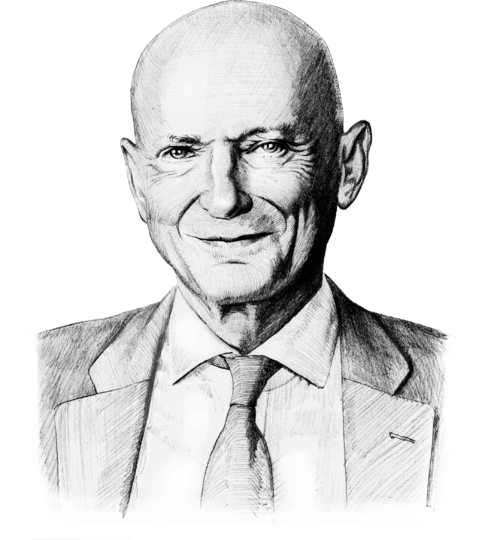
Who is Gurbanguly Berdymukhamedov?
Gurbanguly Berdymukhamedov served as the country’s president from 2006 to 2022 and is now chairman of the People’s Council, the highest leadership body in Turkmenistan. He handles both domestic and foreign policy and oversees state affairs and visits. Mr. Berdymukhamedov and his family hold much power; his son, Serdar Berdymukhamedov, took over from him as president in 2022 and still holds the role. Gurbanguly Berdymukhamedov is sometimes described as leading an authoritarian regime. He had a 24-carat gold-leaf monument made depicting him riding a horse in the capital city, he drives classic sports cars, has written and performed his own rap songs, and DJs tracks on national television.
Another sign of Ashgabat hedging its bets is its warm response to overtures from Azerbaijan. At a meeting in Baku on June 22, 2025, Azeri President Ilham Aliyev hosted his Turkmen counterpart Serdar Berdymukhamedov. They signed a slew of contracts to increase trade and boost energy relations. The meeting reflected just how keen Baku is to have Ashgabat sign on to its vision of a greatly enhanced role of the Middle Corridor that stretches from China across Central Asia and the Caspian Sea to Azerbaijan and onward to Europe. The ultimate prize would be to finally reach an agreement to build the long-awaited Trans-Caspian Pipeline (TCP).
Not all is as it seems in Central Asia
There are good reasons to be wary of reading too much into these developments. The signing of the Galkynysh expansion deal coincided, symbolically, with the 20th anniversary of the strategic cooperation agreement that was signed between China and Turkmenistan in April 2006. That agreement obliged Beijing to pay $29 million annually in exchange for 30 bcm of gas over the next 30 years. During the subsequent two decades, the two sides built impressive infrastructure for extraction and transportation of natural gas.
Previously known as the South Yoloten gas field, Galkynysh is the cornerstone of this complex. Discovered in 2006, it has been in operation since 2013. It is the second-largest gas field in the world, supplying much of the agreed annual 30 bcm export of gas to China. The recent decision to launch phase four is expected to add a further 10 bcm to that flow.

The two nations also joined hands in building a network of three parallel pipelines that stretch over 1,830 kilometers, from Turkmenistan across Uzbekistan and Kazakhstan to China’s Xinjiang province. Line A of the Central Asia-China Gas Pipeline (CACGP) was launched in 2009. Following an agreement on expansion of extraction into gas fields along the Amu Darya River, Line B was added in 2010, bringing capacity to the agreed 30 bcm. With Line C added in 2015, capacity rose to 55 bcm.
Turkmenistan realizes that being captive to China may have its downsides. It was striking that the agreement on Galkynysh expansion has Turkmenistan footing the $4.6 billion bill in full. China has stalled adding a fourth line to the CACGP. In contrast to the first three lines, Line D would run via Uzbekistan, Tajikistan and Kyrgyzstan to Xinjiang. If built, it would add a further 30 bcm in capacity, bringing the total for the CACGP to 85 bcm.
Two reasons suggest that Beijing will be keen to move ahead on Line D. One is that it would bypass Kazakhstan and thus allow for diversification of vital transport routes. Another is China’s recent decision to begin developing the massive Bokhtar gas field in the southwestern part of Tajikistan. Integrating Tajikistan into its Central Asian resource base is well in line with Chinese strategy. Ground for the Tajik part of Line D was broken in September 2014, in the presence of Chinese President Xi Jinping and Tajik President Emomali Rahmon. Since then, however, the project has been marked by setbacks and postponements.
Turkmenistan realizes that being captive to China may have its downsides.
Stefan Hedlund
The main reason why matters are stalled is that China is playing a bargaining game, which includes playing hardball with Russia over the proposed construction of the Power of Siberia 2 (PoS-2), a second major pipeline for imports of Russian gas. Beijing has adopted a hard stance, expecting that Moscow can be pushed into footing the whole bill for the pipeline and, subsequently, finds itself in a weak bargaining position regarding price.
Chinese insistence that Turkmenistan should pay for the Galkynysh expansion is part of that same game, as is the stalling of construction of Line D. Ashgabat in consequence is incentivized to enhance its own bargaining position. Completion of TAPI would add the same capacity as Line D, and completion of the westward-flowing TCP would add yet another 30 bcm. If both are built, and Line D is not, China would end up taking less than half of Turkmen gas exports, with the remainder flowing in Europe’s direction.
Time is of the essence
Although this is not a likely outcome, there is a window of opportunity for Azerbaijan. The warming of relations between Ashgabat and Baku may only be forming part of a bargaining game, yet, by playing that game, the two sides will make commitments that set the stage for more to come.
Turkmen oil in modest amounts has been flowing via Azerbaijan since 2010. That has been enhanced by the recent addition of an oil and gas field on the maritime border between Azerbaijan and Turkmenistan alternately called Kapaz by Azerbaijan and Serdar by Turkmenistan. Discovered in 1986, it was only in 2021 that the two sides reached agreement on joint exploration. The field was symbolically renamed “Dostluk,” which means “friendship” in both languages. Meanwhile, a variety of swap deals and proposals for a more limited 10 bcm gas interconnector indicate that there is also movement in the trade of gas. What is more, Azerbaijan has spare capacity in its existing pipeline grid.
Read more by post-Soviet affairs expert Stefan Hedlund
- Armenians vote for Europe
- Russia’s next Baltic move may not be invasion
- Nordic-Baltic-B9 cooperation fills Europe’s security gap
The main obstacle to a real breakthrough lies in providing assurance for Turkmenistan that commitment to building the TCP will bring such benefits that it is worth provoking both Russia and China. It is important but not sufficient that the United States and the European Union have supported diversification of energy supplies to include Turkmen supplies. The outcome, however, will be decided within the region itself.
As Azerbaijan and Turkiye have so much at stake, it was not surprising that the June 2025 meeting in Baku covered a whole range of issues that went beyond energy, including industry, agriculture, banking, tourism and labor migration. Efforts to have the TCP built feed into the broader, ongoing transformation of the Caspian region’s geopolitics and energy trade strategies.
Scenarios
More likely: China prevails, indefinitely stalling TCP and creating vassals
The baseline, most likely scenario in the near- to mid-term is that China prevails – that it not only gets Russia to pay for PoS-2 but also reaches agreement on Line D to proceed from Turkmenistan via Uzbekistan, Tajikistan and Kyrgyzstan to Xinjiang. Anticipating that its future needs for gas will then be more than secured, Beijing will play suppliers off each other. PoS-2 will add 50 bcm. Together with the existing Power of Siberia 1 and a proposed China-Russia Far East Pipeline, Beijing could import close to 100 bcm of Russian gas by 2030, covering more than a fifth of projected demand. If Line D is built as well, possible imports from Central Asia will rise to 85 bcm. With the addition of gas from the Myanmar pipeline, and rising imports of liquefied natural gas, China will be able to bargain from a position of great strength.
Turkmenistan is aiming for an output of 76 bcm in 2026. It maintains that current exports to China are around 40 bcm and that the two countries are aiming to increase that flow to 65 bcm. China responds that the current flow is only 30 bcm and that expansion is contingent on Line D being built, which is “still under discussion.” China is playing a waiting game, expecting that both Russia and Turkmenistan will bend to its will. If it prevails, there will be no TCP for quite some time.
Less likely: Beijing overplays its hand, energy from Central Asia flows west
The alternate scenario is that Beijing overplays its hand, to an extent that allows Baku to make serious inroads leading to more Turkmen hydrocarbons flowing westward toward Europe in the near- to mid-term.
All the major Turkmen reserves are in the eastern part of the country and the bulk of Turkmenistan’s existing infrastructure has been designed to pump gas from those fields to China, yet that need not be an insurmountable obstacle. In December 2015, an opening ceremony was held for a $2 billion East-West Pipeline that was designed to pump 30 bcm from Galkynysh to the Caspian shore, where it would link up with an underwater pipeline to Azerbaijan. It was when the latter was blocked by Russian-Iranian pressure and European hesitation on financing that Turkmenistan moved to deepen its cooperation with China.
What makes this alternate scenario possible is the broad warming of relations between Ashgabat and Baku. For Azerbaijan and Turkey to make serious headway on their goal of becoming a new, strategic transport corridor for energy from Central Asia westward, they must convince Turkmenistan to make a major commitment on joint development efforts. The main driving force is that locking energy flows from Turkmenistan into its own orbit would be such a prize for the Ankara-Baku energy alliance that making substantial efforts to woo Ashgabat will be seen as worthwhile.
Even if this is not sufficient for the TCP to be built in the short term, an increased level of exchange between Ashgabat and Baku will in any case create momentum that supports a gradual transformation of regional geopolitics. This will not only have important implications for the Middle Corridor, which is a vital interest for Turkiye. It will also enhance the probability that down the road sufficient funds will be made available for the TCP to be built whether or not China likes the development.
Contact us today for tailored geopolitical insights and industry-specific advisory services.

Sign up for our newsletter
Receive insights from our experts every week in your inbox.
Information about what personal data we collect about you and how we process it (including information about how we personalize our website for you and deliver content tailored to you) can be found in our privacy policy.