Greenland and the scramble for the Arctic

President Trump’s renewed quest for Greenland sheds light on Arctic ambitions and escalating global tensions over space, trade routes, military strategy and resources.
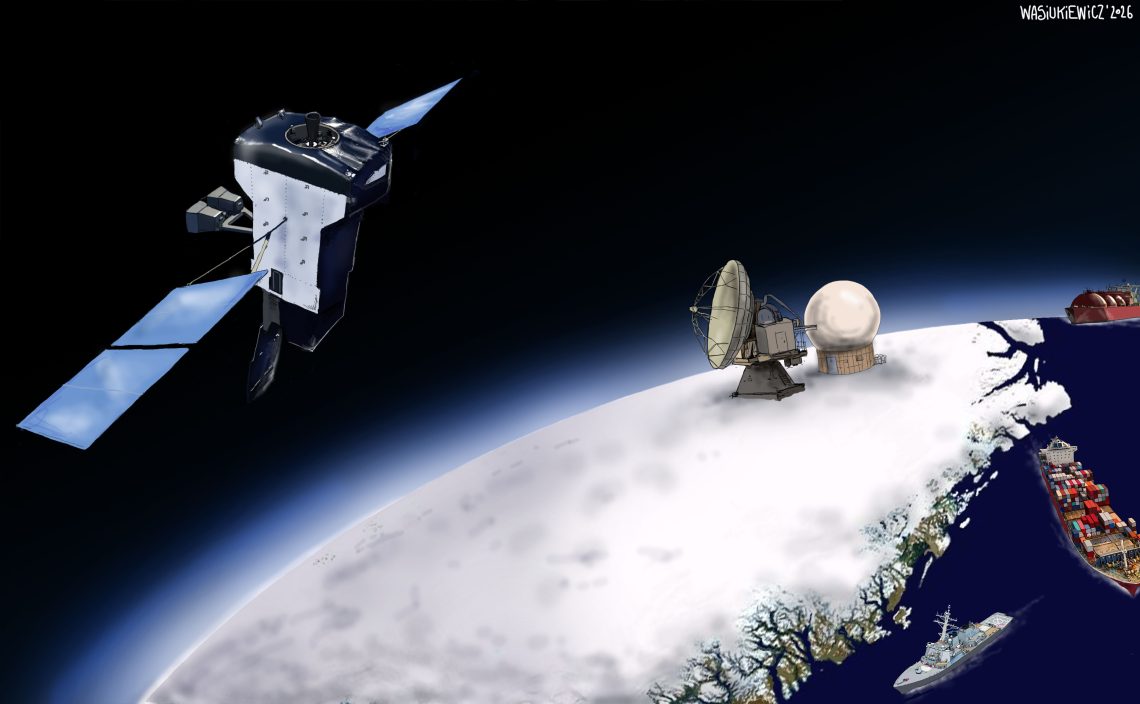
In late December, United States President Donald Trump reasserted his desire to acquire Greenland. He appointed Louisiana Governor Jeff Landry as his special envoy to the island and plans to present a proposal to Congress. This announcement sparked outrage across Europe, which views it as yet another example of the president’s “outrageous” behavior and erratic politics. Many Europeans believe the motivations behind this move center on access to raw materials and economic enrichment. However, as is often the case with Donald Trump, his strategic thinking is being misunderstood and overlooked.
Greenland, the world’s largest island, is an autonomous territory within the Kingdom of Denmark, home to fewer than 57,000 residents. In 1985, Greenland withdrew from the European Economic Community (the predecessor of the European Union).
When President Trump proposed to buy Greenland from Denmark in 2019, the reaction across Europe was one of ridicule. Nevertheless, this was not the first time such an attempt had been made. As early as 1867, shortly after the U.S. purchased Alaska from Russia, the State Department commissioned a report on the possibility of acquiring the Arctic island. Then, in 1910, the U.S. Embassy in Copenhagen offered certain territories in the Philippines in exchange for Greenland. In 1946, at the very outset of the Cold War, President Harry S. Truman proposed $100 million in gold for the island, but Denmark declined the offer.
Why President Trump wants Greenland
Greenland holds immense strategic significance for the U.S., as it is a crucial part of the Arctic region. Its location between Eurasia (particularly Russia) and North America positions it as a critical asset in military competition. Aware of this importance, Moscow has stepped up its military activity along its northern border and around Svalbard. This escalation is a direct threat to the U.S., making Greenland an essential territory for controlling access to the Arctic and ensuring forward defense capabilities. Take a look at the globe to see where Greenland is located and notice how close Russia’s northern regions are to North America in the Arctic.
The U.S. has already established an important post in northwestern Greenland to provide early warnings about incoming intercontinental ballistic missiles and to support their interception.
Greenland’s location between Eurasia (particularly Russia) and North America positions it as a critical asset in military competition.
Another aspect to consider is China’s growing interest in the Arctic. This rise in interest is tied not only to climate change, which is causing the Northeast Passage to open up between Europe and Northeast Asia along the Russian coastline, but also to the military strategic importance and the vast oil and gas reserves located at the top of the world.
For all major powers, the emerging battlefields of the Arctic and space are closely interconnected. This is probably the most critical issue at hand.
The ongoing conflict in Ukraine underscores the importance of satellite-based guidance. Communication satellites typically orbit at high altitudes, moving east to west along the equator, while surveillance and spy satellites operate in a north-south trajectory, passing over the poles. These satellites are positioned at lower altitudes and use the Earth’s rotation to capture clearer images. Launching from polar regions aids not only initial deployment but also monitoring capabilities.
More by GIS Founder and Chairman Prince Michael of Liechtenstein
- European security, mindset collapse
- Global challenges in 2026 and beyond
- The U.S. securing the Western Hemisphere
Nuclear-powered submarines armed with ballistic missiles, many equipped with nuclear warheads, can effectively conceal themselves beneath the Arctic ice cap. Russia is increasing its activities in the Arctic, focusing not only on space surveillance but also on strengthening its naval presence by deploying submarines and icebreakers.
Antarctica undoubtedly plays a similar role in satellite navigation and the availability of raw materials. However, its strategic position differs greatly from that of the Northern Hemisphere. Approximately two-thirds of the world’s landmass lies north of the equator, where around 90 percent of the global population resides. This region is also where major powers that could be involved in conflicts converge. That said, we cannot overlook the growing Chinese activities in and around Antarctica, which warrant attention and consideration.
Fading U.S. trust in Europe
Coming back to President Trump’s claim on Greenland, one could argue that the island is part of Denmark, a member of NATO and an ally of the U.S. However, Washington is losing trust in its European allies. As a European, it is shameful for me to acknowledge that Europe has in the past decades provided ample reasons for this assessment.
Additionally, Greenland’s small population – with a strong Inuit majority – is not always content with Danish rule. This dissatisfaction stems partly from resentment over alleged colonial-era mistreatment of the Inuit. Emphasizing these issues risks opening the door to greater Sino-Russian influence.
Considering all the above, we can conclude that the White House will maintain its current strategy. The newly appointed envoy could work on the principle of self-determination for the 57,000 Greenlanders, presenting arguments that highlight the potential benefits for them.

Sign up for our newsletter
Receive insights from our experts every week in your inbox.