Iran’s protests look like the first tremors of regime collapse
The latest wave of unrest has exposed deep structural weaknesses in the Iranian regime.
In a nutshell
- Public anger is fueled by corruption and collapsing living conditions
- The president’s conciliatory tone contrasts with hard-line judicial pressure
- Protests expose regime fragility but still lack elements of full revolutionary change
- For comprehensive insights, tune into our AI-powered podcast here
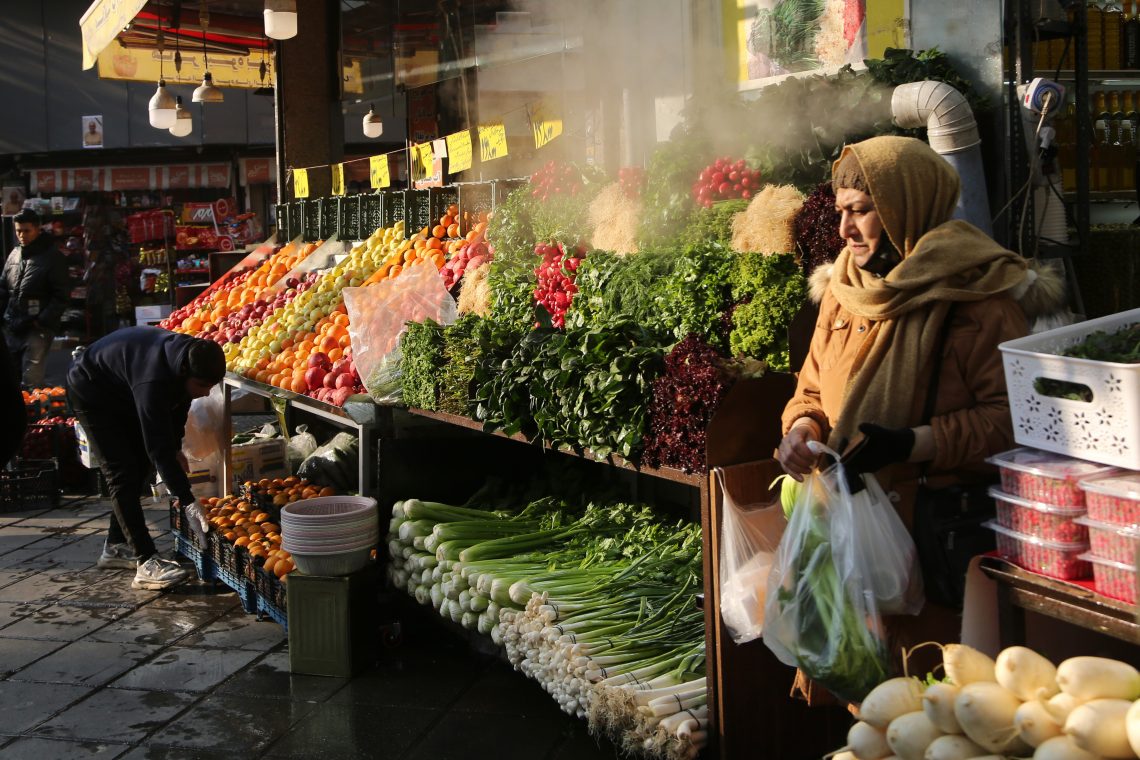
On December 28, 2025, shops selling electronics and mobile phones in central Tehran shut their doors in protest at the sharp rise in the dollar and gold prices and the extreme volatility of Iran’s currency, the rial. Traditionally, 10 rials equal one toman, the unit commonly used in everyday transactions. More recently, the authorities introduced a “new rial,” redenominated so that one new rial equals 100 old rials. The move closely resembles Israel’s 1985 introduction of the new shekel as a response to hyperinflation.
The authorities’ silence only deepened public panic and accelerated the rush to buy the United States currency. That day, the rial fell on the open market to a record 1.44 million to the dollar, before recovering slightly to around 1.37 million on December 30. This comes as official figures showed annual inflation rising to over 52 percent by late December from around 42 percent a month earlier. The fluctuation makes it impossible to set prices on imported goods.
In addition, President Masoud Pezeshkian in late December submitted a new budget proposal that promised help for the lowest income segments of society but also threatened to raise taxes. That was swiftly followed by most of the bazaar merchants rising in protest.
Widespread discontent over living conditions
The bazaaris, Iran’s merchant class, have been closely tied to the clerical class since the rise of the Qajar dynasty in the late 18th century. They provided the mullahs with financial and political support against the regime. This alliance prevailed during the 1891-1892 tobacco revolt, when they forced the shah to cancel a British concession. The same happened during the 1905-1911 Constitutional Revolution, when merchant strikes imposed constitutional limits on Ahmad Shah Qajar.
In March 1951, the bazaaris backed Mohammad Mossadegh’s nationalization of Iran’s oil. Their support was also crucial to the success of Ayatollah Ruhollah Khomeini’s revolution in 1978-1979.
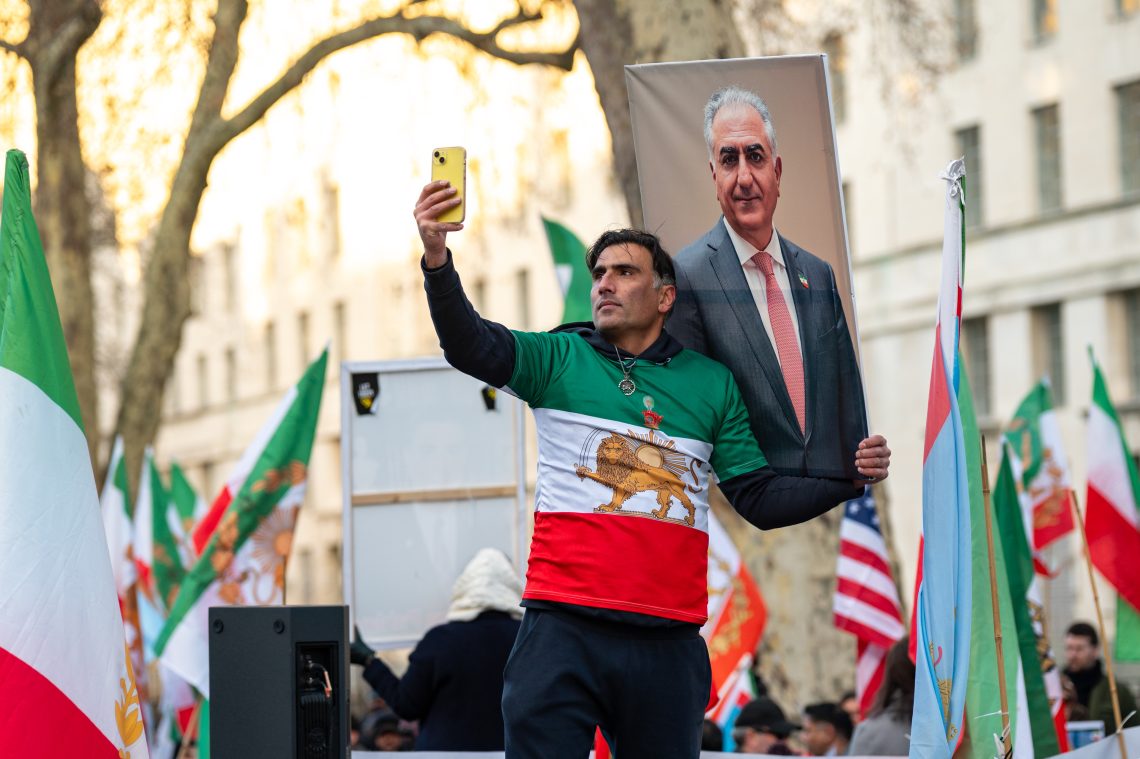
In the current situation, the merchants were joined by students on the second day of the protest, and together they marched to Tehran’s Khomeini Square. The demonstrators were heard clearly shouting “Long live the shah,” “Long live the monarchy,” “Shame on you Pezeshkian, leave Iran,” “No Lebanon, no Gaza, we shall sacrifice our life for Iran,” and “Death to the dictator,” meaning Supreme Leader Ayatollah Ali Khamenei. The demonstrations spread to other large cities, mainly Mashhad, Isfahan and Shiraz. At first the police used non-lethal means to curb the demonstrations, but on the third day, they shot at protesters.
Iran’s president met with the bazaaris and pledged measures to ease the population’s economic hardships. The governor of the national bank was replaced. However, senior judges adopted a hard-line stance and warned that demonstrators would face prosecution.
On December 31, the government declared a “holiday,” closing all offices and schools, yet demonstrations continued to spread, reaching 17 of Iran’s 31 provinces. Workers in the oil sector and members of the truckers’ union joined the strike. The convergence of merchants, students, oil workers and truckers poses a deeply troubling sign for the regime.
President Pezeshkian’s approach to calming the unrest contrasted sharply with that of his radical predecessor, Ebrahim Raisi. This, in fact, was precisely why the Supreme Leader had engineered his election victory in July 2024. Instead of resorting to brutal repression, Mr. Pezeshkian acknowledged the public’s right to protest. He admitted that the unbearable cost of living was the regime’s responsibility, even hinting that the authorities had fostered corruption, and he pledged to address these failures.
On the third day of the protests, for example, he said in a television broadcast: “Don’t go after America or blame anyone. … It is we who must properly manage our problems; it is we who must find a way to solve the problems.”
On the sixth anniversary of the death of General Qasem Suleimani, Mr. Pezeshkian struck a religious tone, saying that the Quran suggests officials “belong in hell” if they fail to solve people’s problems. He also vowed that his government would stop giving privileged insiders access to subsidized dollars, saying those who received them had been unfairly “benefiting from rent.” From now on, he promised, the subsidy would go directly to ordinary consumers instead of favored groups.
Severe economic crisis
Throughout the rial’s collapse in December 2025, importers, distributors and regime-connected firms could still access hard currency from government-controlled channels at heavily subsidized, artificially low rates far below market value. This multi-tier exchange system enabled billions of dollars to flow to well-connected insiders and regime favorites, reinforcing public perceptions of deep economic injustice.
The liberal pledges made by President Pezeshkian certainly had the Supreme Leader’s backing. Yet if the president’s conciliatory approach fails, the regime is likely to increase the ungoing violent crackdown. In fact, the protests continued to spread precisely because many Iranians regarded Mr. Pezeshkian’s gestures with skepticism. As Professor Morteza Nemati Zargaran asked, “What action can you take if the protesters’ representatives challenge the country’s overarching policies? What will you do if they are arrested by power centers beyond your government?”
Scenarios
More likely: Regime collapse in the medium to long term
On January 8, Iran’s internet connection was reduced to 1 percent of normal levels. This was done to disrupt coordination between protesters and hide the regime’s suppression policies. At the same time, the measure showed that the regime is profoundly worried.
This wave of discontent looks like the first tremor of a tectonic shift. At the moment neither the protesters nor the regime can predict how things will end. Yet, it is already clear that this wave is more dangerous to the regime than the 2022 demonstrations protesting the murder of Mahsa Amini. Beyond the call for women’s dignity and freedom, the current movement taps into a broader convergence of public anger over nearly every area of the regime’s responsibilities.
The unbearable cost of living has been hollowing out the Iranian middle and lower-middle classes for more than a decade. Environmental conditions have also deteriorated sharply: Air pollution has reached hazardous levels, and after years of drought and excessive groundwater use, drinking water in Tehran has become dangerously scarce. The president himself has acknowledged that the city is subsiding by around 30 centimeters a year, with sinkholes appearing across urban areas. The situation has grown so severe that Mr. Pezeshkian has even warned that the capital might need to be relocated some 1,000 kilometers south to the Gulf of Oman. Daily life has been severely disrupted, not only because taps run dry, but also because electricity and cooking gas are frequently unavailable.
Regarding the ayatollahs’ handling of international affairs, the public does not believe the regime’s claim to have won the 12-day war with Israel. Iranians believe that the war ended with a humiliating defeat for the regime’s pride and joy, the haughty and ruthless Islamic Revolutionary Guard Corps (IRGC). For the first time ever, the IRGC, so heroic and successful in the Iran-Iraq War (1980-1988), was roundly defeated. It has become clear that this hallowed force is now mostly an empty shell, effective only against unarmed citizens at home.
Finally, the Supreme Leader is neither young nor healthy. He vanished from public view during the war and has remained silent in the early days of the protests, reinforcing the impression of a power vacuum at the regime’s core. At the same time, U.S. President Donald Trump’s warning that Washington would intervene if the regime used violence against demonstrators has further emboldened activists.
Less likely: Regime reforms to avoid collapse
Several decisive elements needed for systemic change are still missing, which may result in the regime holding on to power for the time being. The shah’s son has not yet emerged as a unifying figure comparable to Ayatollah Khomeini in 1978-1979. No significant parts of the military, the IRGC, the police or the Basij militia have defected, and there is not yet a visible split within the leadership. The demonstrations themselves, even though they are spreading throughout most of the country and reaching new segments of society, still involve thousands rather than millions.
The regime may still succeed in driving a wedge between the unions and the bazaaris, with the oil sector and the farmers on the one hand side, and the urban middle and lower-middle class and university youth on the other. It may also ignore President Trump’s warning and send in the IRGC that is currently waiting on the sidelines.
Even so, this moment marks the beginning of the regime’s decline. The ruling elite appears unable to grasp the depth of anger among younger Iranians, who live with a stark contradiction. They face poverty, unemployment and a bleak future in a country rich in resources. Many place the blame squarely on the authorities and still believe they have the power to force change. The protests are shaking the regime’s foundations and will soon force a stark choice: undertake meaningful change or risk eventual collapse.
Contact us today for tailored geopolitical insights and industry-specific advisory services.

Sign up for our newsletter
Receive insights from our experts every week in your inbox.