Venezuela key in Trump’s national security strategy
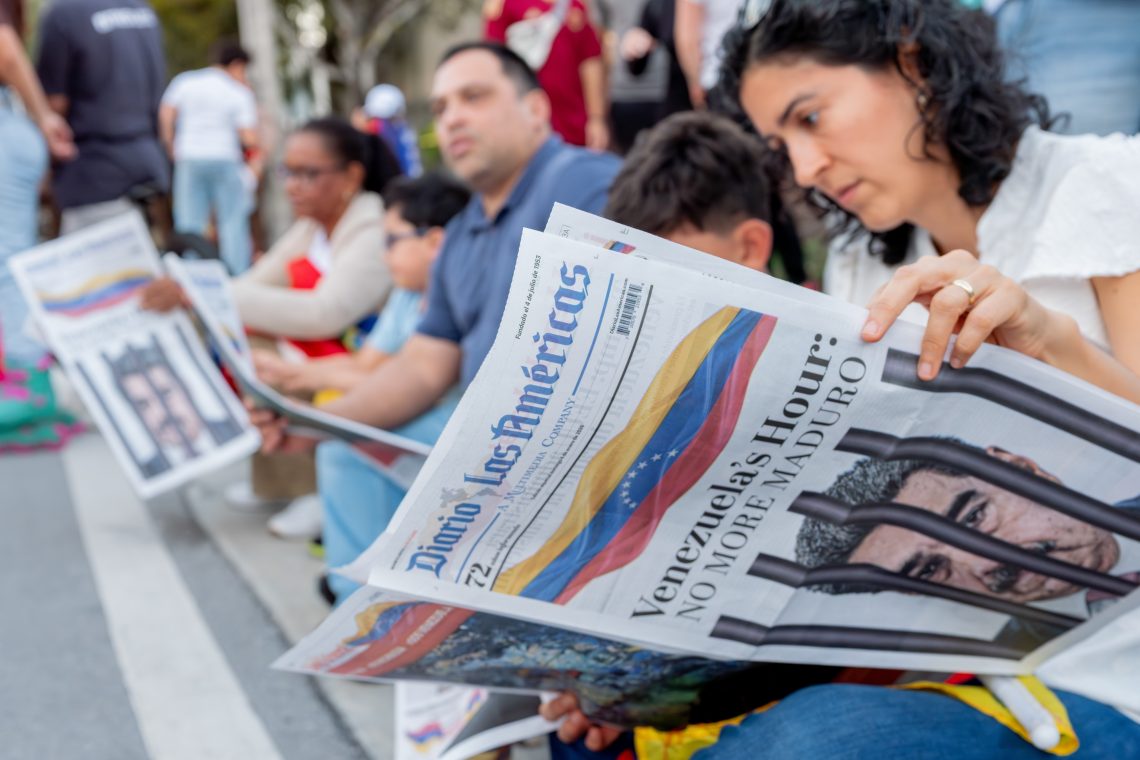
In a historic military operation, the U.S. has detained Venezuelan President Nicolas Maduro, raising questions about his regime’s future and regional stability.
In a nutshell
- Mr. Maduro faces drug charges and is currently held in New York
- Trump’s NSS emphasizes restoring U.S. dominance in Latin America
- Venezuela has historical ties with China, Russia and Iran for military support
- For comprehensive insights, tune into our AI-powered podcast here
In a shocking turn of events, the United States carried out a large-scale military strike against Venezuela on January 3, capturing President Nicolas Maduro and his wife, Cilia Flores, in Caracas. Mr. Maduro is currently held at a New York detention center, and appeared in court on Monday to face charges related to drug trafficking and weapons possession.
During a press conference at his Mar-a-Lago resort in Florida, U.S. President Donald Trump hailed the operation to apprehend the Venezuelan dictator as one of the most “stunning, effective and powerful displays of American military might and competence in American history.” The attack marked the most significant and direct U.S. intervention in Latin America since the invasion of Panama in 1989.
The U.S. strikes occurred against the backdrop of a prolonged pressure campaign against Venezuela. The Trump administration had sent military assets to the Caribbean and conducted multiple deadly operations targeting suspected drug-trafficking boats. The attack and the capture of Mr. Maduro has sparked a range of questions: Is this really an anti-drug operation, or is it a maneuver to counter the influence of China, Russia and Iran in Latin America? If most of the narcotics entering the U.S. come from Mexico, Ecuador, Peru and Colombia, why focus efforts on Venezuela?
The answers to some of these questions can be found in the U.S. National Security Strategy (NSS) document released in November. According to the NSS, “after years of neglect,” the U.S. will reassert and enforce the “Trump Corollary” to the Monroe Doctrine, to “restore American preeminence in the Western Hemisphere.”
The document sets out four guidelines related to the Venezuelan crisis: protecting the U.S. from drug and human trafficking; preventing and discouraging mass migration; bolstering America’s energy sector; and keeping the Western Hemisphere free of hostile foreign incursion or ownership of key assets. The NSS labels Russia, China and Iran, among others, as hostile.
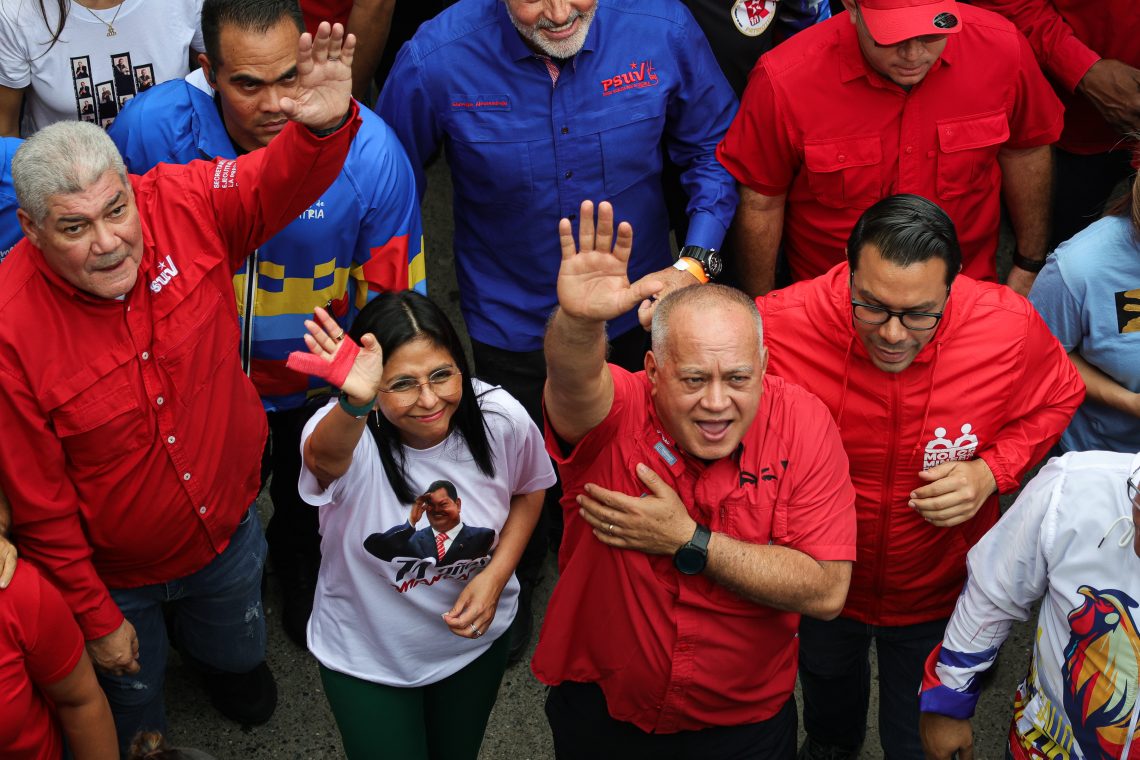
The future of the Venezuelan regime remains uncertain. Although President Trump has claimed that the U.S. will play a decisive role in the country’s fate, the Venezuelan military seems to be firmly in control of the nation and its military resources.
On Saturday, the country’s Supreme Court ordered Vice President Delcy Rodriguez to step in as acting president during Mr. Maduro’s “temporary absence.” President Trump remarked that Ms. Rodriguez had expressed her backing for Washington, adding, “She really doesn’t have a choice.” He has threatened a second American strike on Venezuela if remaining members of the Maduro regime do not cooperate with his efforts to get the country “fixed.”
The Cartel of the Suns
Following the fall of the Berlin Wall in 1989, Fidel Castro, the late leader of Cuba, was forced to replace the support he had previously relied on from the Soviet Union. To adapt to this shift, he focused on building new regional power centers.
One of his strategies was the establishment of the Sao Paulo Forum (SPF), which aimed to unite left-wing political forces across Latin America. He also focused on consolidating the Marxist irregular armed struggle through groups like the Simon Bolivar Guerrilla Coordination Committee. Another aspect of his approach involved the coordination of various forms of organized crime, particularly in the realm of drug trafficking.
Castro capitalized on the rise to power of his protege, the late Venezuelan dictator Hugo Chavez, using Venezuela as his primary operational hub in the region, thanks to its vast oil wealth. Chavez authorized the Revolutionary Armed Forces of Colombia (FARC), then the most important drug cartel in Latin America, to operate within Venezuelan borders, which ultimately led to the emergence of the Cartel of the Suns – drug trafficking cells that operate within the Venezuelan military.
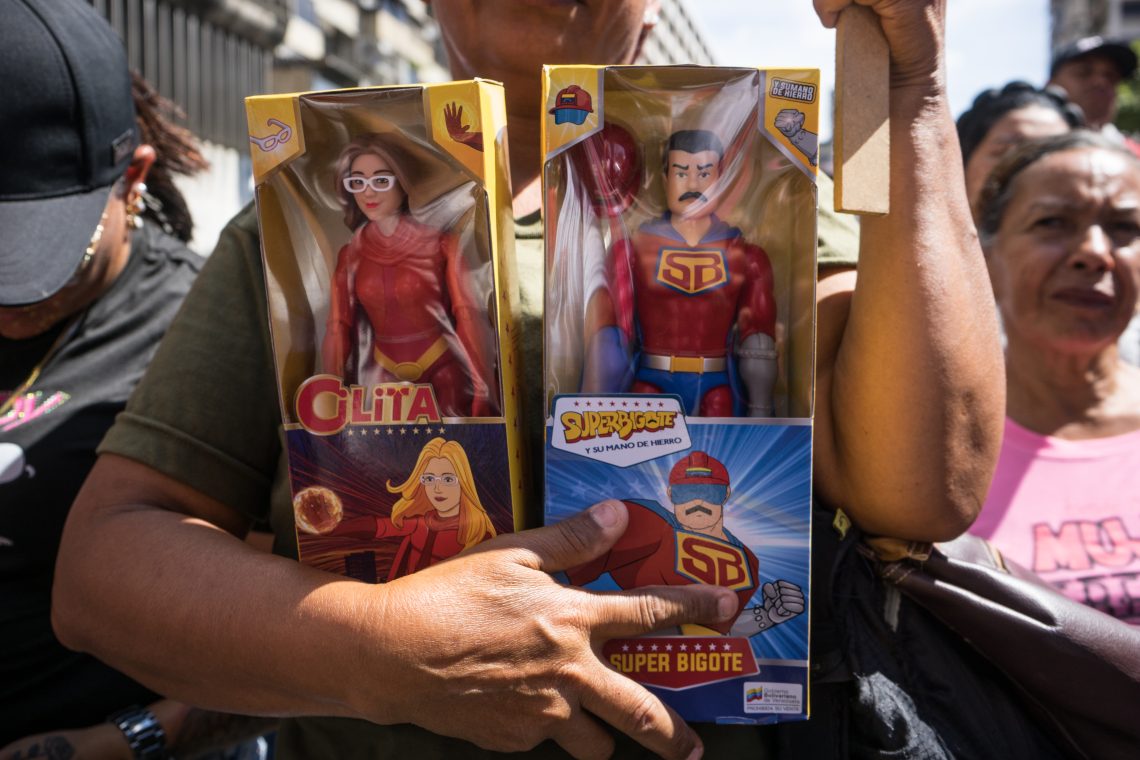
Castro and Chavez redefined the landscape of the cocaine trade. What was once simply a profit-driven business, like the operations of Colombia’s Medellin and Cali cartels, evolved into a weapon of political power. This shift allowed them to secure substantial funding. The Cartel of the Suns stands out as the most powerful drug trafficking organization in the Western Hemisphere because it operates with the support of the state.
Critics of U.S. President Donald Trump make a valid point when they note that Venezuela is not a coca-producing nation like Bolivia, Colombia, Ecuador or Peru. It is also accurate that most drugs enter the U.S. through Mexico. However, it is important to recognize that cartels from across Latin America utilize Venezuela as the main hub for coordination and distribution.
In a letter to President Trump, Venezuelan three-star general Hugo “El Pollo” Carvajal, who was one of the founders of the Cartel of the Suns, described the Nicolas Maduro government as a “narco-terrorist organization” and said that the purpose of the cartel was to use drugs as a weapon against the U.S.
General Carvajal, who was Hugo Chavez’s and Nicolas Maduro’s intelligence chief, is currently imprisoned in the U.S. after pleading guilty in a federal narco-terrorism case.
Recent investigations have found that Venezuela is responsible for distributing over 20 percent of the cocaine consumed in the Western Hemisphere. On August 7, both the Department of State and the Department of Justice announced an increase in the reward for any information that leads to the arrest and/or conviction of Mr. Maduro for violating U.S. narcotics laws. Before his capture, the reward stood at $50 million.
Venezuelan mass migration
The ongoing refugee crisis in Venezuela is the largest displacement crisis in Latin America and is among the largest in the world. According to the United Nations Refugee Agency, nearly 7.9 million refugees and migrants have fled Venezuela since 2025 in pursuit of safety and a better life. The Interagency Coordination Platform for Refugees and Migrants from Venezuela (R4V) estimates that there are currently about 545,000 Venezuelan migrants residing in the U.S.
The number of encounters (border apprehensions, inadmissibles) involving Venezuelan migrants at the U.S.-Mexico border has significantly increased, rising from 49,000 in 2021 to 188,000 in 2022 and 266,000 in 2023. Although encounters slowed slightly in 2024, they remained elevated at 261,000. Therefore, the figures provided by R4V could be an underestimation.

The vast majority of Venezuelan migrants are honest and hardworking, but a small fraction of individuals have been linked to criminal activity, which has unfairly tarnished the reputation of the entire community. General Carvajal has alleged that the regime deliberately recruited criminal groups like Tren de Aragua from prisons and facilitated their travel to the U.S. to commit various crimes, including drug trafficking, kidnapping and extortion.
As Maria Corina Machado, the Venezuelan opposition leader and Nobel Peace Prize laureate, has pointed out, a democratic change in government would lead most migrants to return to the country.
Venezuelan oil for U.S. refineries
Venezuela has always been a reliable supplier of crude oil to the U.S., which was particularly evident during World War II. Numerous refineries have been built in Texas and Louisiana, designed to process heavy crude oil, such as that extracted from Venezuela.
Since the U.S. does not produce much heavy crude oil, it relies on imports from Canada, Mexico and even some countries in the Middle East. This significantly raises transportation and insurance costs, which in turn drive up gasoline prices. The increased fuel costs ripple through the economy, impacting the prices of other consumer goods and triggering inflation.
Facts & figures
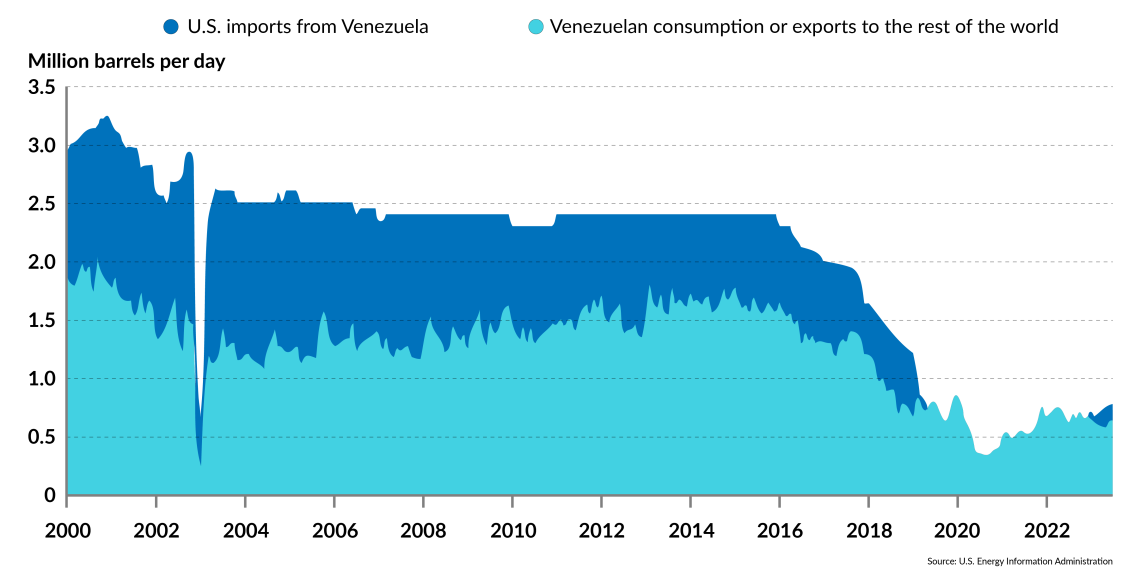
The U.S. is currently energy independent and does not need Venezuelan oil to supply its own market, but resuming heavy crude shipments from the country would reduce gasoline costs and support the energy goals set out in the national security document.
After the capture of Mr. Maduro, U.S. Secretary of State Marco Rubio indicated that Washington would not manage Venezuela’s daily affairs, apart from enforcing an ongoing “oil quarantine.” He noted that the blockade on sanctioned oil tankers – some of which have been seized by the U.S. – remains intact. “That is a tremendous amount of leverage that will continue to be in place until we see changes that not just further the national interest of the U.S., which is number one, but also that lead to a better future for the people of Venezuela,” he added.

China, Russia and Iran in Venezuela
From the onset of Chavez’s presidency until 2018, Venezuela secured over $62 billion in loans and around $6 billion in investments from China. This funding accounted for 46 percent of all Chinese financial support in Latin America during that same period.
Venezuela stands out as the only Latin American nation that has entered into a Strategic Partnership and Cooperation Agreement with Russia. This agreement lays out a comprehensive roadmap designed to enhance collaboration in vital areas such as energy, finance, infrastructure, security, communication, scientific research, mining, transportation and military cooperation.
Russian state-owned engineering giant Rostec’s primary subsidiary, Rosoboronexport, has completed a factory project to produce 70 million cartridges annually for Kalashnikov rifles in Venezuela. This is just one of many military agreements between Moscow and Caracas. The country has been one of the largest buyers of Russian weapons in the region, including Sukhoi fighter jets and S-300 missile systems.
More by Latin America expert Alejandro Peña Esclusa
- Colombia: Petro facing mounting pressure
- Scandals erode Sao Paulo Forum’s leftist grip
- Seven elections will determine the future of Latin America
Iran and Venezuela have signed an estimated 300 agreements, ranging from working on housing projects to cement plants, car factories and military cooperation. According to the Miami Herald, Venezuela has developed “a robust unmanned aerial vehicle program that now produces not only reconnaissance units, but also armed systems, stealth models and kamikaze drones loaded with explosives – all inspired by Iranian designs.”
U.S. Secretary of State Marco Rubio said: “Iran, its Islamic Revolutionary Guard Corps, and even Hezbollah have a presence in South America, and one of their anchor presence – especially for the Iranians – is inside of Venezuela.”
Russian, Chinese and Iranian officials have firmly condemned the action against the deposed Venezuelan dictator, calling it a violation of international law and a troubling precedent.
Trump’s stance on Venezuela
The U.S. has several motives for advocating a change in government in Venezuela, all of which are addressed in the NSS, along with concerns surrounding the defense of democracy and human rights. Among these reasons, the Trump administration has prominently focused on drug trafficking as its primary argument. It has stated that drugs serve as weapons of war, taking American lives and causing more devastation than many wars fought by the U.S., including those in Vietnam and Iraq.
President Trump also clarified that this is not a war against Venezuela or its people, but against an illegitimate narco-tyrant who committed fraud in the 2024 elections and maintains power through terror and repression. Venezuela’s recognized president-elect, Edmundo Gonzalez Urrutia, is viewed by the opposition and many international governments – including the U.S. – as the legitimate winner of the disputed 2024 election. Along with Ms. Machado, he has publicly supported the ongoing U.S. military deployment in the Caribbean.
At this moment, as Mr. Rubio has pointed out, the U.S.’s main interest is to complete the dismantling of the Cartel of the Suns – that is, to manage a surrender process led by Mr. Maduro’s designated vice president, Ms. Rodriguez. If she fails to fulfill her commitment to the U.S. to facilitate a return to democracy, she will surely suffer the same fate as Mr. Maduro.
Contact us today for tailored geopolitical insights and industry-specific advisory services.
Sign up for our newsletter
Receive insights from our experts every week in your inbox.