The French leadership paradox

Deepening fiscal stress, rigid centralization and political fragmentation undermine France’s capacity for effective governance reform.
In a nutshell
- Economic stagnation, rising debt and pension paralysis erode confidence
- Extreme centralization weakens accountability and bloats bureaucracy
- Political fragmentation and constitutional deadlock stymie leadership
- For comprehensive insights, tune into our AI-powered podcast here
This is part three of the GIS series on the Crisis of Leadership. Part one can be found here and the second installment here.
France, the second-largest economy of the European Union and an essential pillar of the European project, has lately become a source of concern. Its financial situation is flashing red alarm lights while its politicians − partly because of recent political instability and successive governments imploding before achieving anything meaningful − seem unable or uninterested in solving the country’s most pressing issues.
This is an apparent paradox for a country that has traditionally been very centralized. Resolving this lack of leadership at the worst possible moment will not be easy, and understanding its major causes is crucial.
Economic and financial woes
Like some other Western countries, France faces a plethora of economic challenges, including a degradation of its human capital, a fall in productivity, deindustrialization and sluggish growth (expected at 0.8 percent in 2025, down from 1.4 and 1.2 percent, respectively, in 2023 and 2024). Unemployment has been on the rise (in late 2025 at 7.6 percent, or 3.2 million people, not having worked for over a year). The number of business failures is on the rise and in 2025 reached 69,000, surpassing the 2024 record by 3 percent.
Such weak economic activity typically translates into stagnating fiscal revenues, and this is certainly true in the case of France. Government income reached 1.5 trillion euros in 2024, while public spending rose to 1.67 trillion euros, leading to a worsening public deficit of 5.8 percent of gross domestic product. France already has the highest level of public spending in the EU (57.5 percent of GDP) and the highest tax pressure rate (45.3 percent of GDP).
Interest payments on French sovereign debt reached 67 billion euros in 2025 – the second largest budget item after education. Official forecasts by the High Council of Public Finances expect the debt servicing costs alone to reach 107 billion euros in 2029. France is unable to tame its ever growing public debt, which was 3.42 trillion euros, or 115 percent of GDP, at the end of the second quarter of 2025.

The pension crisis is also more acute in France than elsewhere given demographic imbalances, the retirement of baby boomers and the country’s generous welfare system. The latest pension reform that aimed to raise the retirement age modestly to 64 (from 62) has been suspended after major public protests. Pensions represent 14 percent of GDP (versus a 10 percent average in the EU). Given the efforts to reform pension systems in other European countries (Denmark will raise its retirement age to 70 as of 2040), the inability to reform pensions in France seems comical. The same goes for public spending more broadly. But the deadlock is no joke.
Investors are growing increasingly weary. The French-German spread on sovereign bond yields – an indicator of whether France is competitive with its neighbor to borrow − is increasing (now even higher than the Italian-German spread). The yields on French 10-year bonds fluctuated around 3.4 percent in late 2025. Moreover, 55 percent of investors in French sovereign bonds are foreigners, which leaves the country dependent on external financing. Unsurprisingly, France’s sovereign debt rating was recently downgraded by Fitch Ratings (to A+ on September 12) and Standard & Poor’s (A+ on October 7); Moody’s changed its outlook to negative on October 24. What is behind these downgrades is the expectation that French leadership will remain too weak to address structural issues.
Centralization’s drawbacks
France’s peculiar centralized nature has created all sorts of perverse effects that weaken accountability and sound leadership. The French Republican tradition is centralist because it is elitist. Its institutions are inspired by the Chinese Mandarin system, Plato’s elitism and aspects of the “scientific socialism” of the early 19th century, combined with soft liberalism, one of the intellectual roots of the French Revolution. This model of governance has proven awkward: The revolution just replaced one elitism with another.
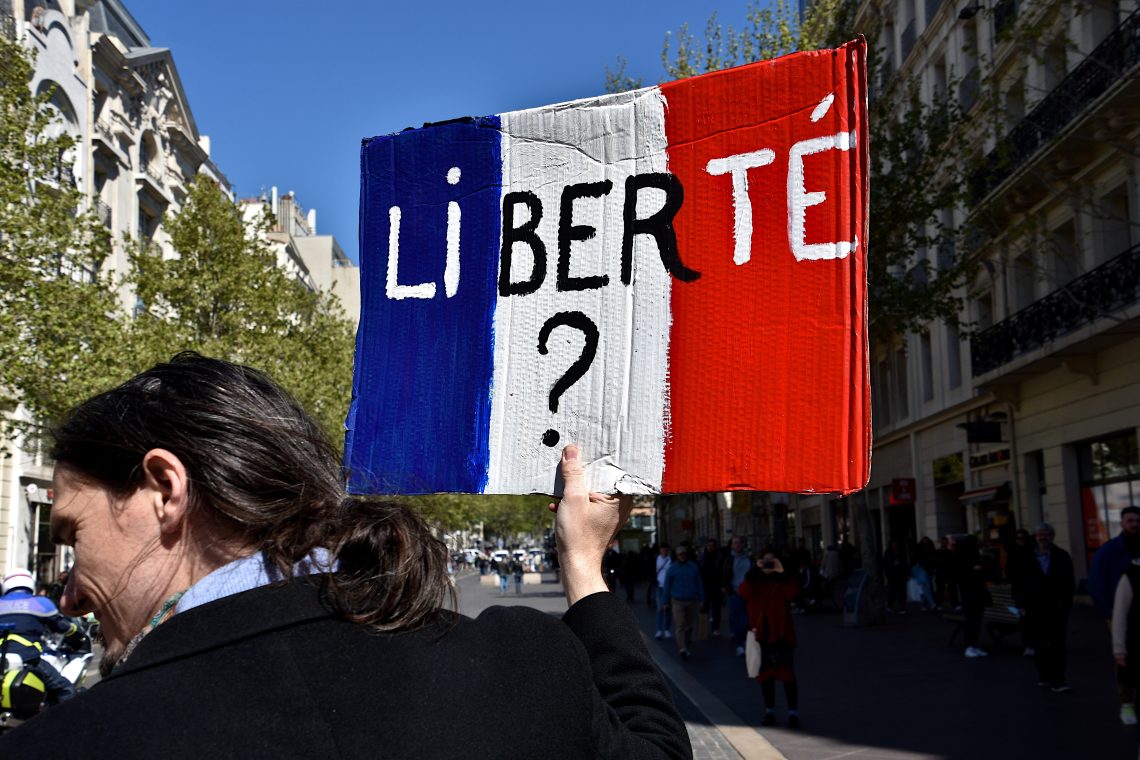
The Republican elite that used to be trained at the famous Ecole Nationale d’Administration (ENA) “knows what is good for the people,” and is, by definition, above the common people: “Accountability” and “democracy” are thus to some extent mere decorum in such a system. Without accountability, it is very easy to forget about one’s civic responsibilities and instead to “spend to exist” in the political arena. Mistrust dominates on both sides of the spectrum of voters; the Yellow Vest movement was a symptom of this.
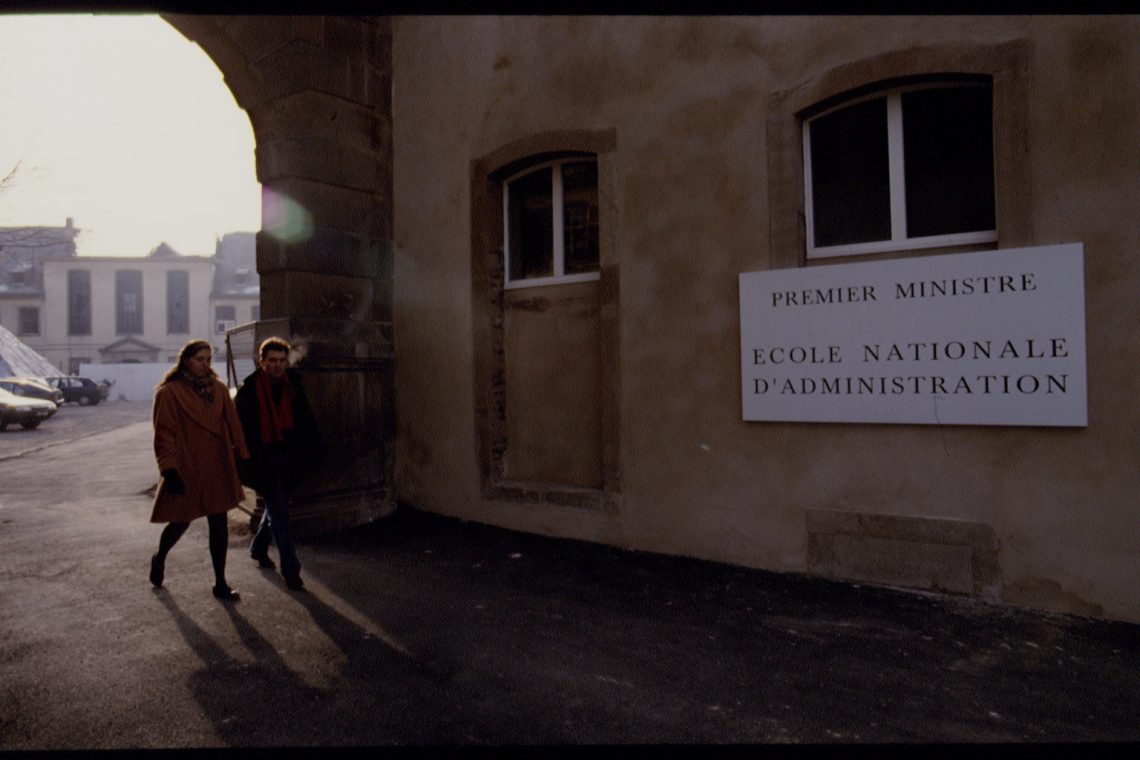
Centralization also means a strong bureaucracy. The laws of 1946 granting civil servants three rights − to unionize, strike and remain employed for life − have given bureaucrats incredible power against the reforms the country so badly needs. The laws institutionalized the impossibility for democratically elected governments to manage their administration (for example, by reducing staff if required) for fear of the country’s activities grinding to a halt amid tumultuous French general strikes. As a result, the state’s share of the economy only expands – automatically inflating the pro-spending constituency.
Bureaucracy, with its rigid rules and poor incentives, lacks innovation and is prone to overregulating the economy. Former Minister Alain Peyrefitte in the 1970s famously described this as the “French ailment.”
After 1982, decentralization – in a still centralized state – made things worse. Without genuine subsidiarity and fiscal autonomy of the lower levels of government, it blurred responsibilities between the increasing layers of administration. Removing any clear connection between spending and taxing decisions weakened transparency and accountability even more. It is no wonder spending has continued to increase unabated.
The same goes for the French welfare state, born in 1945 and influenced by both the remnants of the Vichy regime and the communist agenda. It is highly centralized by the state, but not in an egalitarian way, as it is also corporatist. Each corporation vertically bargains its asymmetric social rights (on top of already generous basic rights) with the nanny state. This prevents genuine horizontal social dialogue across social corporations, weakens social responsibility and generates yet another layer of social mistrust. Reforming a system that overspends without accountability is a serious challenge: Any political leadership attempting to reform is perceived as hostile to the people.
France’s political mess
While the situation calls for decisive leadership, the past one and a half years in France have been chaotic and have prevented any decisive action. The dissolution of the National Assembly and the call for legislative elections in June 2024 by French President Emmanuel Macron, following elections to the European parliament that saw strong support for the far right, have indeed increasingly paralyzed public decision-making.
Three prime ministers and governments have been put to the test since. Michel Barnier took office in September 2024 and did not even last 100 days. Then Francois Bayrou, who presided over the delayed formation of a budget for 2025, was toppled by a no-confidence vote after 10 months.
Sebastien Lecornu, appointed in September, resigned a few hours after finally announcing his own cabinet, only to be appointed again the next day, with the formation of yet another new government. While structural reforms are urgent, the mere delivery of the next budget is once again creating political chaos, with the National Assembly too fragmented to yield a solid coalition.
Unstable stability in Paris
The lack of effective governance seems even more paradoxical when one considers that the French Fifth Republic introduced in 1958 by General Charles de Gaulle was supposed to deliver strong leadership and decisive action when required. Its constitution indeed established so-called rationalized parliamentarism – a parliamentary system with a strong executive. The idea was to avoid the political instability of the previous system of the very parliamentarian Fourth Republic (1946-1958).
Currently, executive power is split between the president and the prime minister. Elections to the National Assembly (the lower house) are usually held every five years. Until 2000, the presidential election was held every seven years, then it was shortened to five. The president can dissolve the National Assembly in order to try to secure a legislative majority with a prime minister on his side.
This system allows for three possible configurations.
First, a president with an absolute legislative majority could bring stability. However, stability does not necessarily mean sound leadership. A legislative majority for the president means weak parliamentary control of the government and the bureaucracy. And the two-headed nature of the executive regularly turns the prime minister into a political fuse, blown to shield the president from any accountability – hence the feeling of presidential monarchy. This lack of responsibility at the top spreads throughout the different layers of the entire administration, encouraging the familiar pattern of spending simply to exist.
Yet, there can be no genuine, efficient leadership without accountability. This is the paradox of the “inefficient absolutism” denounced by famous French intellectual Jean-Francois Revel, and it is partially what is paralyzing France’s leadership today.
Second, when the legislative majority is against the president, what the French call cohabitation, it can create deadlock. For example, the president can torpedo any reform proposed by the government and its legislative majority.
Worthy of note is that, in 2000, the shortening of the presidential term to five years coupled with an inversion of the electoral calendar (legislative elections right after the presidential elections) was supposed to modernize French democracy. To some extent, it made things worse, as legislative elections since then only confirm the presidential election: The National Assembly became a chamber of yes-men, blocking the formation of coalitions, which are essential in democracies.
While further weakening the role of the prime minister, the reform led to excessive popular expectations of the president (who since 1962 is directly elected) to solve various issues – a trend known as presidentialization. With the president unable to live up to such hopes, especially as there is a lack of accountability in the office, there is increasing mistrust toward the office and its holder.
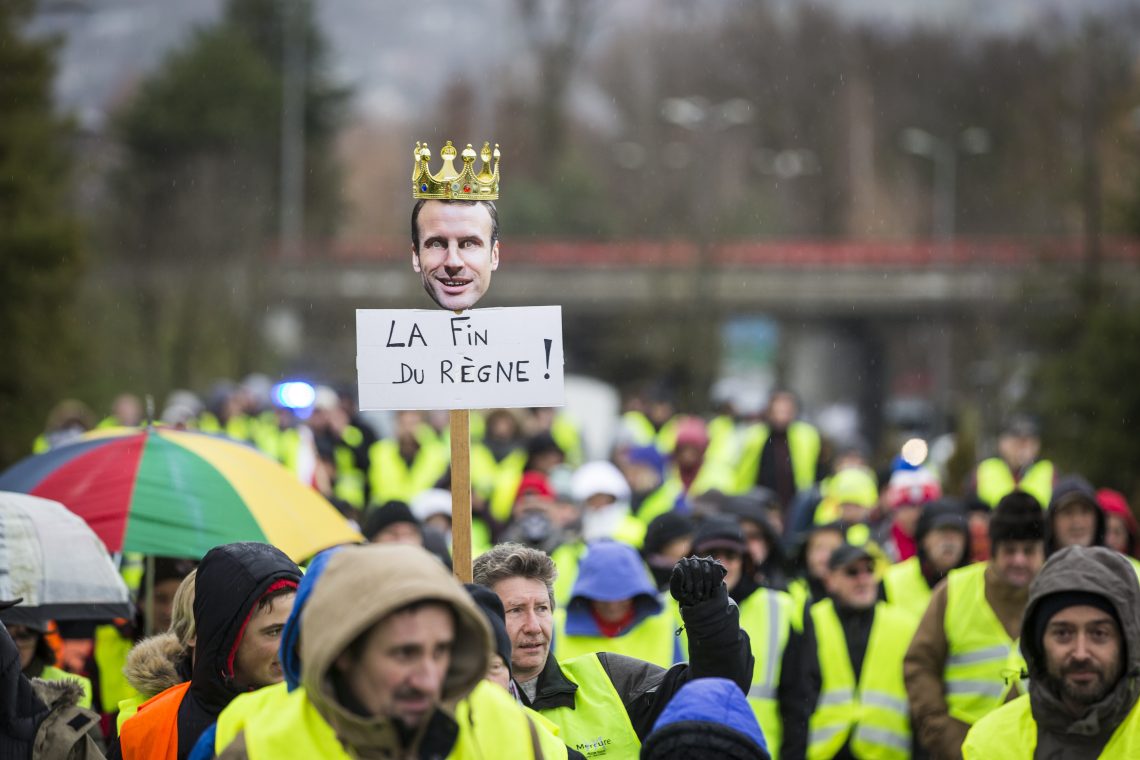
Another reform, just before the great recession in 2008, was supposed to give the parliament more power: It did slightly weaken the president’s ability to impose his own leadership when the latter is needed. However, the president is still not responsible before the National Assembly, which he can dissolve. This reinforces a popular feeling that national representation is ineffective, and a widespread sentiment that the president is not solving problems. Together, these factors pushed democracy out of the parliament and onto the streets where strikes, violent demonstrations (such as the Yellow Vests) and rising mistrust have made France’s crisis of leadership even worse.
Third, when the parliament is fragmented due to political polarization with no absolute majority, as has been the case since the last presidential elections in 2022, an institutional deadlock emerges, especially with a systemic inaptitude to create coalitions. In this case, the prime minister, chosen by the president, cannot impose his views on a fragmented National Assembly.
He thus has an incentive to use a constitutional weapon (the famous 49-3 article) to force government bills into law. Former Prime Minister Elisabeth Borne used it 23 times after the 2022 legislative elections. Recent governments have been reluctant to trigger the measure. Popularly perceived as a denial of democracy (despite the risk of no confidence vote for the prime minister), the practice fuels mistrust.
Read more on Europe’s challenging political times
- France’s National Rally marches toward power
- Rising fringe a challenge for Europe’s mainstream
- National parliaments are the EU’s next rightward battleground
Another device, though non-institutional, is the cordon sanitaire used by a self-anointed “Republican Front” to contain the rise of the far right, supposedly to protect democracy. In practice it prevents any coalition with the National Rally from emerging during the second round of elections, despite that party now being the largest in the National Assembly.
The result of such a lack of leadership is that any meaningful, structural reform is out of reach. This leaves tax increases as the only option to keep the state afloat.
Contact us today for tailored geopolitical insights and industry-specific advisory services.

Sign up for our newsletter
Receive insights from our experts every week in your inbox.