Myanmar junta seeks legitimacy through elections

Four years after seizing power, Myanmar’s military is conducting phased elections it openly admits will exclude large parts of the country.
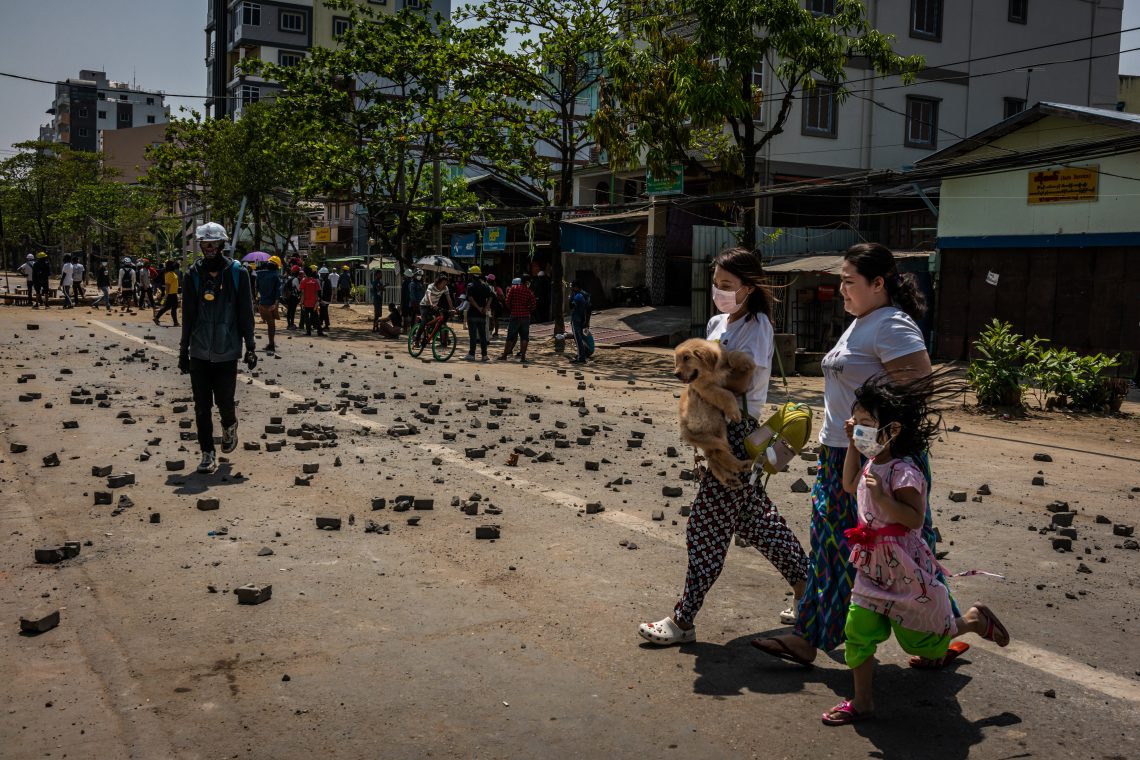
In a nutshell
- Junta intensifies airstrikes to tighten its grip on the country
- Nearly half the population of Myanmar lives in poverty
- Elections are unlikely to break the cycle of violence
- For comprehensive insights, tune into our AI-powered podcast here
The leader of Myanmar’s junta, Senior General Min Aung Hlaing, has himself previously admitted that the military-backed government will not be able to hold the upcoming multi-phased general election nationwide, as the civil war sparked by the 2021 coup rages on. “We cannot hold the election everywhere 100 percent,” he said.
Myanmar’s military, also known as the Tatmadaw, has announced that the first phase of the elections will be held starting December 28. The vote has already been widely condemned as illegitimate by some countries, the United Nations and various human rights organizations. Myanmar last held nationwide elections in November 2020, with the junta subsequently launching a coup against the elected government in February 2021.
Many pro-democracy parties have either been dissolved or have decided to boycott the elections altogether. The junta is currently facing significant opposition from established ethnic armies and newly formed armed groups, which have successfully taken control of extensive territories from the heavily armed military.
Despite the junta’s hope that elections will lend legitimacy to its rule following the ousting of the elected National League of Democracy (NLD) government led by Aung San Suu Kyi in the coup, it appears that these developments alone are unlikely to represent a decisive break from the protracted cycle of violence. The elections raise broader questions about the country’s future and its implications for Southeast Asia, the Indo-Pacific and the world at large.
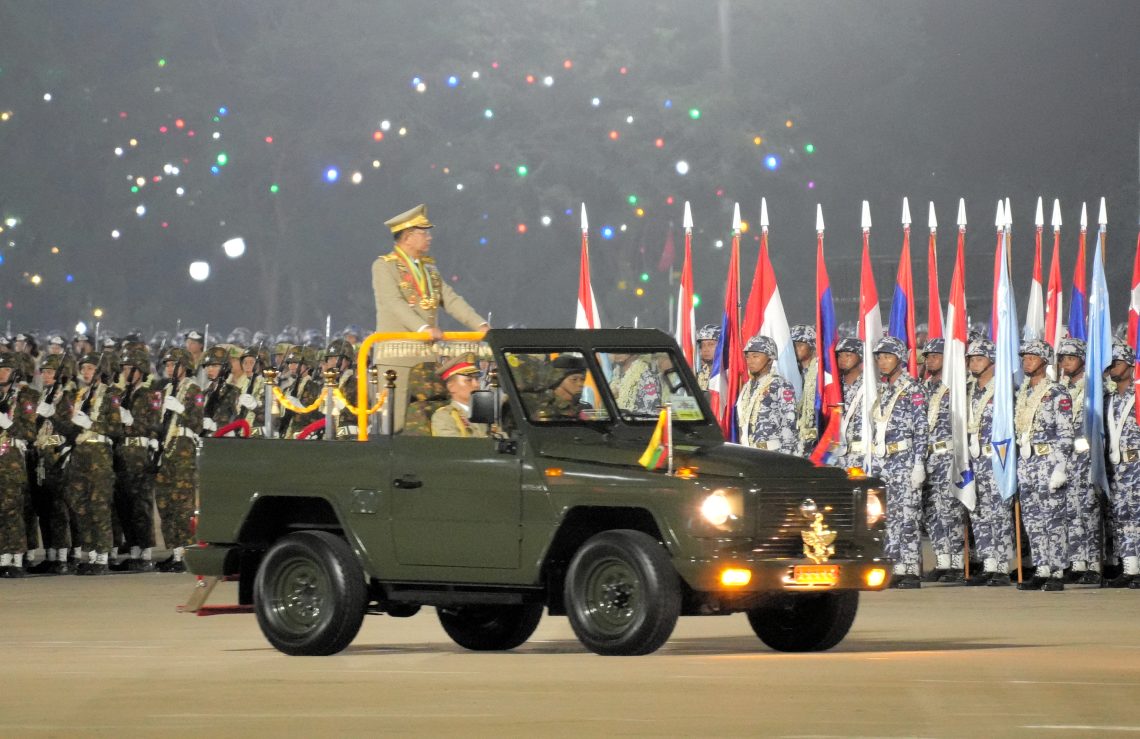
A controlled vote in an uncontrolled country
The spotlight on Myanmar’s elections and their aftermath comes as the rising regional and global stakes of the country’s ongoing civil war have become increasingly apparent. The regime is attempting to tighten its controversial grip on the country by employing tactics such as forced military conscription and ramping up aerial bombardment.
Various organizations, including Interpol, have highlighted Myanmar’s role as a global epicenter for cyber scam networks. Following the coup, scam centers have quickly proliferated across Myanmar, spreading from areas controlled by militias into regions under junta control. These scams have already cost victims billions of dollars and are estimated to affect over a third of the 193 countries recognized by the United Nations.
The connections between ethnic armed groups and the resulting refugee outflows of hundreds of thousands since the onset of the civil war, underscore the cross-border spillover effects of Myanmar’s conflict. This is largely due to its geographic location nestled between the world’s two most populous nations, China and India, as well as its strategic access to the Indian Ocean. Myanmar’s ties to Northeast Asia, South Asia and Southeast Asia further accentuate the interconnectedness of regional dynamics.
Facts & figures
The Myanmar civil war (2021-present)
February 2021: A military coup was initiated by the Tatmadaw (Myanmar’s military) following the landslide reelection of Aung San Suu Kyi. Commander-in-Chief Min Aung Hlaing seized power. Widespread protests erupted, resulting in a brutal crackdown. A one-year state of emergency was declared.
April 2021: Formation of the pro-democracy National Unity Government (NUG) in exile, opposing the military junta.
May 2021: The NUG declares a ”people’s defensive war” against the junta with its armed wing, the “People’s Defence Force” (PDF).
August 2021: Min Aung Hlaing declares himself prime minister.
October 2023: The Three Brotherhood Alliance (a coalition of multiple ethnic armed groups aligned with the NUG) gains control of key geographic areas, a significant victory for the resistance in the ongoing civil war.
January 2024: China facilitates a ceasefire between the junta and the Three Brotherhood Alliance, which fails to hold.
February 2024: The Tatmadaw introduces mandatory conscription for men aged 18-35 and women aged 18-27, causing widespread attempts to flee the country.
January 2025: Military control is limited to just 21 percent of Myanmar’s territory.
March 2025: The military junta announces elections for December 2025 or January 2026.
Beyond the ballot: Poverty, war and geopolitical limbo
Estimates indicate that nearly half of the country’s population is living in poverty, while at least a third are experiencing food insecurity. Millions of people are internally displaced. The government recently admitted that the national census faced accessibility issues, leading to nearly 40 percent of the data being based on estimates rather than actual findings. The junta conducted a full, on-the-ground census to generate voter lists in only 145 of the country’s 330 townships, according to a December 2024 census report.
Beyond periodic proposals for rare-earth deals and its quest for full membership in the Shanghai Cooperation Organization (SCO), Myanmar also remains relatively isolated in its alignments. It has found it challenging to overcome its increasing dependence on China and Russia.
More by Southeast Asia expert Prashanth Parameswaran
- U.S.-China competition in Southeast Asia
- Indonesia’s pivotal moment for critical minerals
- Can Laos become a potash powerhouse and realize its resource ambitions?
Even ties with neighboring states have proven difficult to calibrate, with the Myanmar crisis sapping already limited regional bandwidth to bridge differing views within the Association of Southeast Asian Nations (ASEAN). Closer neighbors like Thailand place a greater priority on accommodation, while more distant countries, such as Malaysia and Singapore, advocate a firmer stance against the junta, particularly in light of the damaging repercussions for the region and the grouping’s global credibility.
Periodic developments have also placed the country more squarely in the context of intensifying geopolitical competition, in ways that detract from its humanitarian needs. A striking example came in the aftermath of the 7.7-magnitude earthquake that struck central Myanmar in March, killing over 3,700 people and exacerbating the civil war’s displacement of millions. State-owned media in Beijing and Moscow seized the moment for one-upmanship against the United States, touting their rapid deployment of rescue teams and aid while criticizing Washington’s slow response. This occurred following Washington’s announcement of foreign aid cuts and the dismantling of USAID.
Scenarios
Most likely: Prolonged contestation and uneasy status quo
The most likely scenario is one of continued contestation. Under this scenario, while the upcoming elections could lead to some disturbances in the limited constituencies where they take place, resistance forces would continue to control key regions in Myanmar. The Tatmadaw would hold onto significant levers of power, regardless of any changes in personnel, including for junta chief Min Aung Hlaing.
While elections might marginally boost the junta’s local legitimacy in the areas it controls, they could also ease some of the regional pressure from neighboring Southeast Asian states – some of which may send observers to the elections themselves, despite internal divisions within ASEAN. However, global criticism from organizations such as the UN and the European Union will continue. Speaking at a special summit between ASEAN and the UN held in Malaysia recently, UN Secretary-General Antonio Guterres warned that under the current circumstances, elections “risk further exclusion and instability.”
The ongoing contestation could coexist alongside different interpretations of national unity put forth by various groups. Beyond narrow agreements made within the junta to adjust the perceived balance of civil-military dynamics or with resistance factions, conversations have persisted around more inclusive and ambitious visions, such as establishing a federal democratic union.
Less likely: Power shift toward the junta or resistance forces
In a less likely scenario, the balance of power would gradually shift toward either the junta or the resistance forces. Even members of the opposition now admit they face an increasingly uphill struggle against the junta despite their best efforts.
For instance, a recent estimate from the opposition National Unity Government (NUG), which operates as a parallel government in exile, highlighted that the junta had made military inroads through counteroffensives. It has capitalized on the shifting postures of armed groups, which are under pressure from a “powerful neighboring country” – a clear reference to China. According to the NUG’s own figures, which have been disputed by the military government, the junta currently controls 39 percent of the country’s territory, and only 16 percent is held by opposing forces, with the remainder either under siege or embroiled in active fighting.
Despite its own limitations in terms of rations and weapons, the NUG also noted that the election could serve as a further unifying factor for revolutionary forces. This unity might enable them to adapt their asymmetric warfare tactics, thereby improving resource management and operational effectiveness. As a result, they could achieve some gains in seizing strategic areas from the junta, potentially turning the tide of the conflict.
In a more extreme version of this scenario, the junta could gain ground and shift the balance of power in its favor. Some members of the opposition are concerned that this might trigger foreign involvement, not just by regional countries like India and Thailand, but also the U.S.
Least likely: Disintegration triggers a “Great Scramble” among neighbors
The least likely scenario is one of growing disintegration. The implications of this would be profound. Historically, past periods of heightened fragmentation in Myanmar have typically led to a surge in drug and arms trafficking across its borders. During such times, individual ethnic armed groups shift their focus toward solidifying their control and strengthening their positions.
If this scenario unfolds, it would create a dual reality where ethnic armed groups control parts of the country, while the junta maintains its authority over some areas and urban centers like Yangon. In this situation, we would likely see major actors, including Myanmar’s neighbors, rushing to safeguard their own interests. Their actions may center on pursuing their agendas, which, while beneficial to them, might not help prevent the country’s disintegration. One regional official aptly described this shift as moving from the “Great Game” to the “Great Scramble.”
China is likely to accelerate its ongoing efforts to secure deals with various stakeholders to protect key infrastructure projects. India could, in turn, seek informal arrangements to mitigate the spillover effects of violence into its northeastern states. While some might conclude that this major power maneuvering could reinforce voices within Washington advocating non-intervention in Myanmar, some officials have privately suggested that it might actually strengthen calls for greater U.S. engagement during a sudden crisis. It could resemble the evolving American response to the Thailand-Cambodia border war.
Even the Tatmadaw has been careful to manage expectations about the election, sharing details only periodically, such as the timeline for individual phases and the specific townships involved. This cautious approach only reinforces the reality that, whatever short-term legitimacy the junta hopes to gain from the elections, they are not likely to stabilize Myanmar’s future.
Contact us today for tailored geopolitical insights and industry-specific advisory services.

Sign up for our newsletter
Receive insights from our experts every week in your inbox.