U.S.-Pakistan path to nowhere

Ties between the two countries have warmed, but strategic priorities pull Washington toward India and the South Caucasus.
In a nutshell
- Washington is showing interest in Pakistan’s minerals and oil reserves
- The U.S.-Pakistan thaw risks alienating Beijing further
- Terrorism issues in the South Asian country limit U.S. engagement
- For comprehensive insights, tune into our AI-powered podcast here
This is part 2 of GIS’s two-report series on U.S.-South Asia relations. Part 1 is available here.
The United States and Pakistan have had an on-and-off partnership since Pakistan was established as an independent country in 1947. In recent years, it has seemed as if the “off” phase might become permanent. The need for collaboration with Islamabad dwindled after U.S. President Joe Biden withdrew troops from Afghanistan in 2021, leading to the Taliban’s takeover. Pakistan was increasingly leaning toward becoming a client state of China. By contrast, the U.S. has been strengthening its strategic ties with India, pushing Pakistan further into the background of America’s geostrategic interests.
After the conflict between Pakistan and India in May of this year, Islamabad took the step of nominating U.S. President Donald Trump for the Nobel Peace Prize. This move seems less about genuinely recognizing the U.S. role in facilitating a ceasefire and more about trying to win President Trump’s favor while provoking Indian Prime Minister Narendra Modi. The U.S. has also engaged in high-level dialogues, with the American leader alluding to trade and investment agreements with Pakistan, all to India’s consternation.
U.S.-Pakistan ties warm
Since mid-2025, engagement between Washington and Islamabad has accelerated. Pakistan has hired lobbying firms with close ties to the Trump administration to strengthen bilateral relations. President Trump hosted Pakistan’s army chief, Field Marshal Asim Munir, for lunch – the first time a U.S. president has welcomed the country’s top general and de facto power broker. Mr. Munir returned twice more: for high-level military talks in August and a White House meeting alongside Prime Minister Shehbaz Sharif in September. Three visits in as many months underscore Washington’s readiness to engage directly with Pakistan’s army.
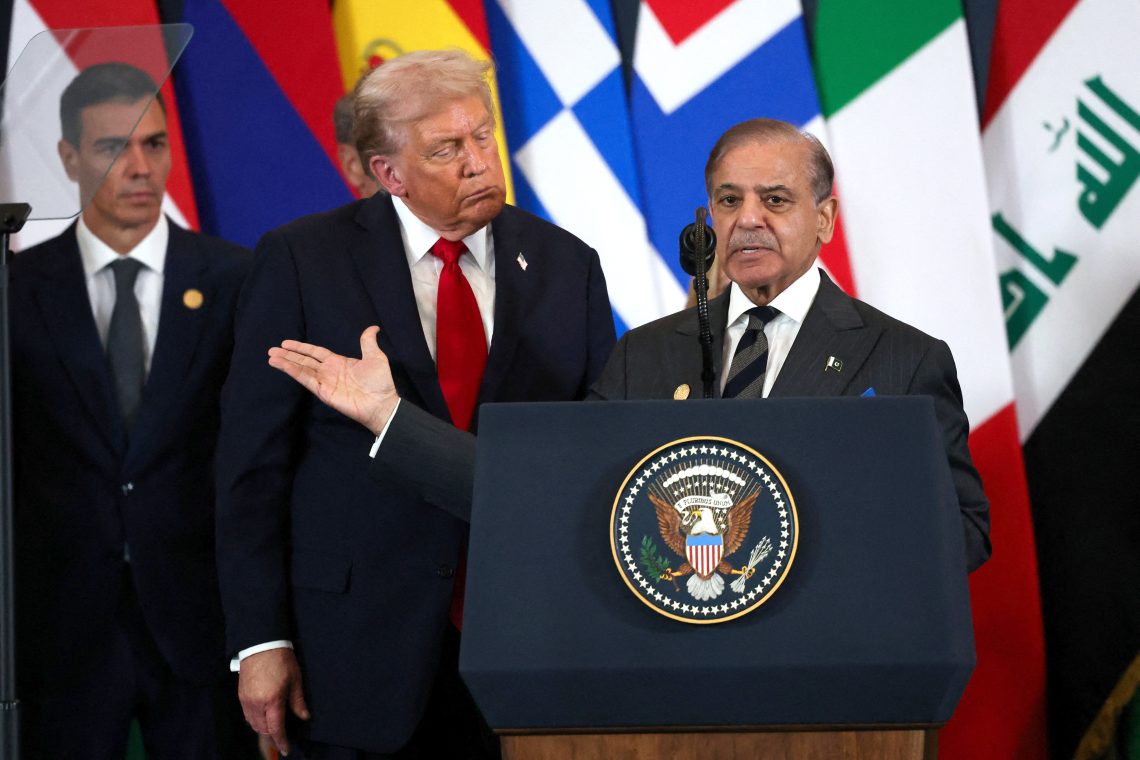
Economic incentives have followed, such as U.S. interest in Pakistan’s rare earth minerals, oil reserves and a proposed port facility at Pasni on the Arabian Sea as a counter to Chinese influence in Gwadar. In a further sign of rapprochement, the two nations finalized a trade agreement in late July, cutting reciprocal tariffs on Pakistani exports to the U.S. to 19 percent.
The shift is notable considering Mr. Trump’s previous stance. In 2018, Mr. Trump had tweeted that the U.S. had given Pakistan “more than $33 billion” in aid and received “only lies and deceit” in return.
In contrast, U.S.-Indian relations have been strained since May, when negotiations for the trade deal that President Trump had sought fell through. The situation worsened after the U.S. imposed steep punitive tariffs on Indian imports due to its purchase of Russian oil, while Russian President Vladimir Putin continued his aggressive campaign in Ukraine. In response, New Delhi staged a visit to China and even sent a small contingent of troops for joint training exercises with Russia.
Yet, even as Washington seeks to strengthen its relationship with Islamabad, the underlying strategic dynamics continue to steer it toward New Delhi.
Washington and New Delhi
From the development of the India-Middle East-Europe Corridor (IMEC) – integral to the U.S.-backed Abraham Accords – to countering China, and from ensuring a free and open Indian Ocean to fostering a thriving economic partnership, the geopolitical forces drawing Washington and New Delhi together exert an irresistible gravitational pull.
India’s other historical strategic partners have become largely irrelevant. For instance, Iran suffered extensive damage from relentless Israeli and U.S. strikes targeting its nuclear facilities, ballistic missile sites and energy infrastructure during the 12-day war in June.
India’s dependence on Russian arms has declined, a trend fueled by the need to diversify sources, concerns over reliability and the demands of the Kremlin’s war against Ukraine. The proportion of Indian arms imports from Russia has dropped from 55 percent during 2015-2019 to 36 percent during 2020-2024. In contrast, imports from France, the U.S. and Israel have increased.
India is also vigorously building a domestic defense manufacturing ecosystem through policy reforms, increased budgets and greater private-sector involvement. The Kremlin, however, remains the top single supplier and a strategic partner.

Both Washington and New Delhi are quietly recognizing that the U.S. and India are gradually moving toward becoming allies in all but name. The Indian administration, in particular, refrains from overtly highlighting this growing bond, as it would not sit well with the public. New Delhi must avoid any impression of being subservient to the U.S. and is keen to maintain its “strategic autonomy.”
The U.S. feels secure enough in its partnership with India to engage in some criticism, reflecting President Trump’s frustrations over the lack of a bilateral trade agreement and the challenges in achieving a ceasefire in the Ukraine conflict.
Despite these issues, it is much easier and more beneficial to get the U.S.-India partnership back on track than to try to revive an alliance with Pakistan. Ultimately, the relationship between the U.S. and India holds far greater strategic significance, as Pakistan offers limited strategic value relative to India. The ongoing presence of transnational terrorist groups within Pakistan, coupled with its hostility toward India, its strong anti-Israel stance and deepening ties with Beijing, all render Islamabad an unreliable partner for the U.S.
America looks east
In addition to its partnership with India, Washington is exploring a route through the South Caucasus, which has become more accessible following the recent Armenia-Azerbaijan peace agreement and the diminishing influence of Iran and Russia. This presents an opportunity for the U.S. to deepen its engagement in Central Asia.
While Central Asia hopes for improved U.S. relations with both Afghanistan and Pakistan to pave the way for additional trade routes, this is not a prerequisite for better ties with Washington. Given the American reluctance to invest substantial effort in normalizing relations with the Taliban in Afghanistan or the military and intelligence agencies in Pakistan, such normalization seems unlikely. The U.S. will continue to engage pragmatically with both entities, particularly when employing the “enemy of my enemy” strategy, but this cooperation will remain limited.
More by national security expert James Jay Carafano
- U.S. eyes greater influence in the South Caucasus
- Counterterrorism returns as a top U.S. priority
- Understanding President Trump’s China strategy
The counterterrorism problem
The first phase of the Trump administration’s global counterterrorism strategy focuses on two main goals: taking down narco-terrorists in the Western Hemisphere and tackling Islamist terrorism and extremism. This approach aims to eliminate threats before they can escalate and execute attacks against the U.S. The strategy emphasizes targeting leadership figures and disrupting their bases of operation and funding sources.
Both Pakistan and Afghanistan have been quietly cooperating during this phase. However, Washington has plans for a second phase aimed at undermining the support and ideology of Islamist groups. If this second phase materializes, it will likely focus on urging Islamic governments to renounce and crack down not just on Islamists, but also on political Islam as a whole.
The U.S. may find allies for this initiative across Africa and Central Asia. But the chances of finding genuine, willing and effective partners in Afghanistan and Pakistan are extremely low. This will pose a long-term challenge to any potential rapprochement between the U.S. and Pakistan.
Scenarios
Most likely: U.S. bolsters its ties with India
The most likely scenario is that the U.S. will continue to strengthen its relationships across the South Caucasus and Central Asia. Ties between the U.S. and India will thaw. A key catalyst for this improvement will likely be cooperation on the IMEC, with countries like Israel and Italy, which have a stake in the project, facilitating dialogue between the two nations. As consternation over recent U.S. policy moves fades, Washington and New Delhi will resume discussions on trade negotiations and defense collaboration.
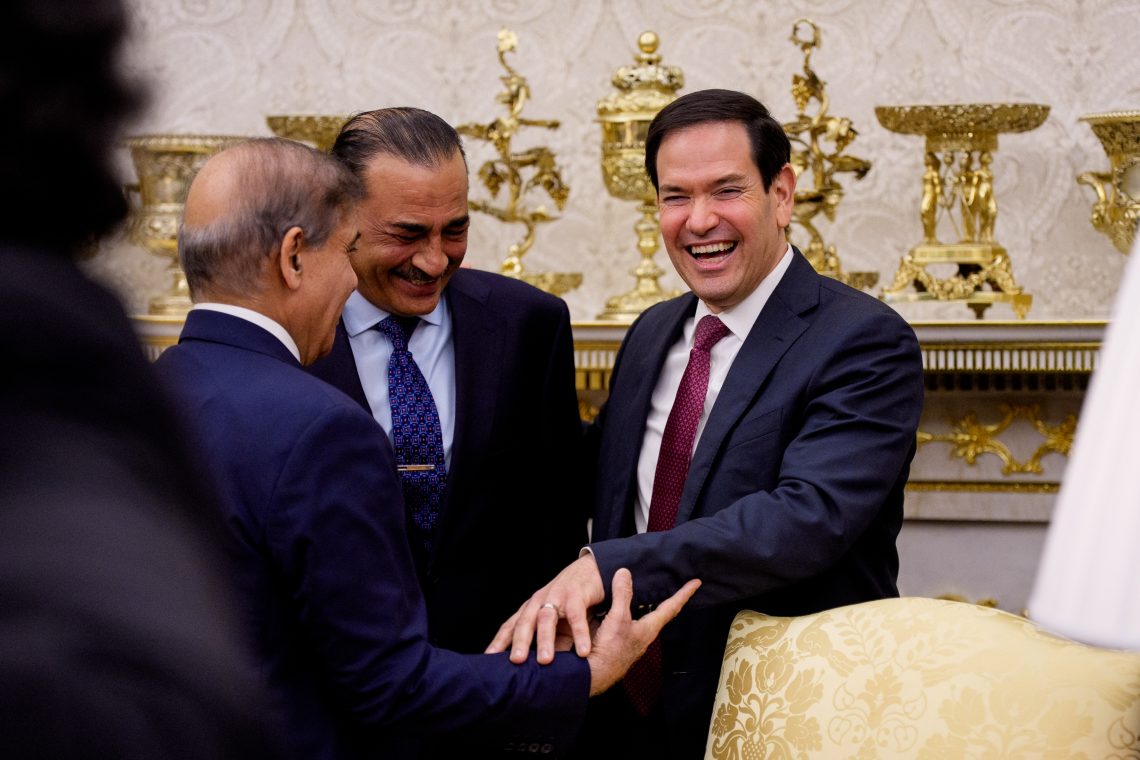
U.S. Secretary of State Marco Rubio recently stated that while America sees an opportunity to strengthen its strategic partnership with Pakistan, he emphasized that this expansion will not come at the expense of its long-standing and vital relationship with India.
Likely: U.S.-Pakistan thaw proves hollow
In Pakistan’s case, it appears to be falling back into a strategic predicament of its own making, with little chance that the U.S. will provide viable solutions. Meanwhile, China is growing increasingly dissatisfied with Islamabad. Beijing’s frustration arises mainly from Pakistan’s inability to secure Chinese personnel and investments in the China-Pakistan Economic Corridor due to increasing militant attacks.
Pakistan is likely to transition from being a junior partner in the Belt and Road Initiative to a more colonized status. The challenges posed by the Taliban will persist, and Pakistan seems unlikely to move away from its longstanding belief that India is the source of its troubles.
Russia, the Middle East and North Korea are either too distant or too weak – or both – to offer much support. Pakistan continues to grapple with its ongoing internal struggles and lacks effective governance. As a result, it appears destined to remain a shaky middle power, possessing a nuclear arsenal that lacks any strategic relevance.
Contact us today for tailored geopolitical insights and industry-specific advisory services.

Sign up for our newsletter
Receive insights from our experts every week in your inbox.